How to Choose the Right Educational Toy for Your Child’s Age: A Guide from 6 Months to 3 Years
Choosing an educational toy isn’t just about how it looks or how many functions it has. In this guide, discover the right toys for each stage from 6 months to 3 years, and how to balance benefit, challenge and safety.
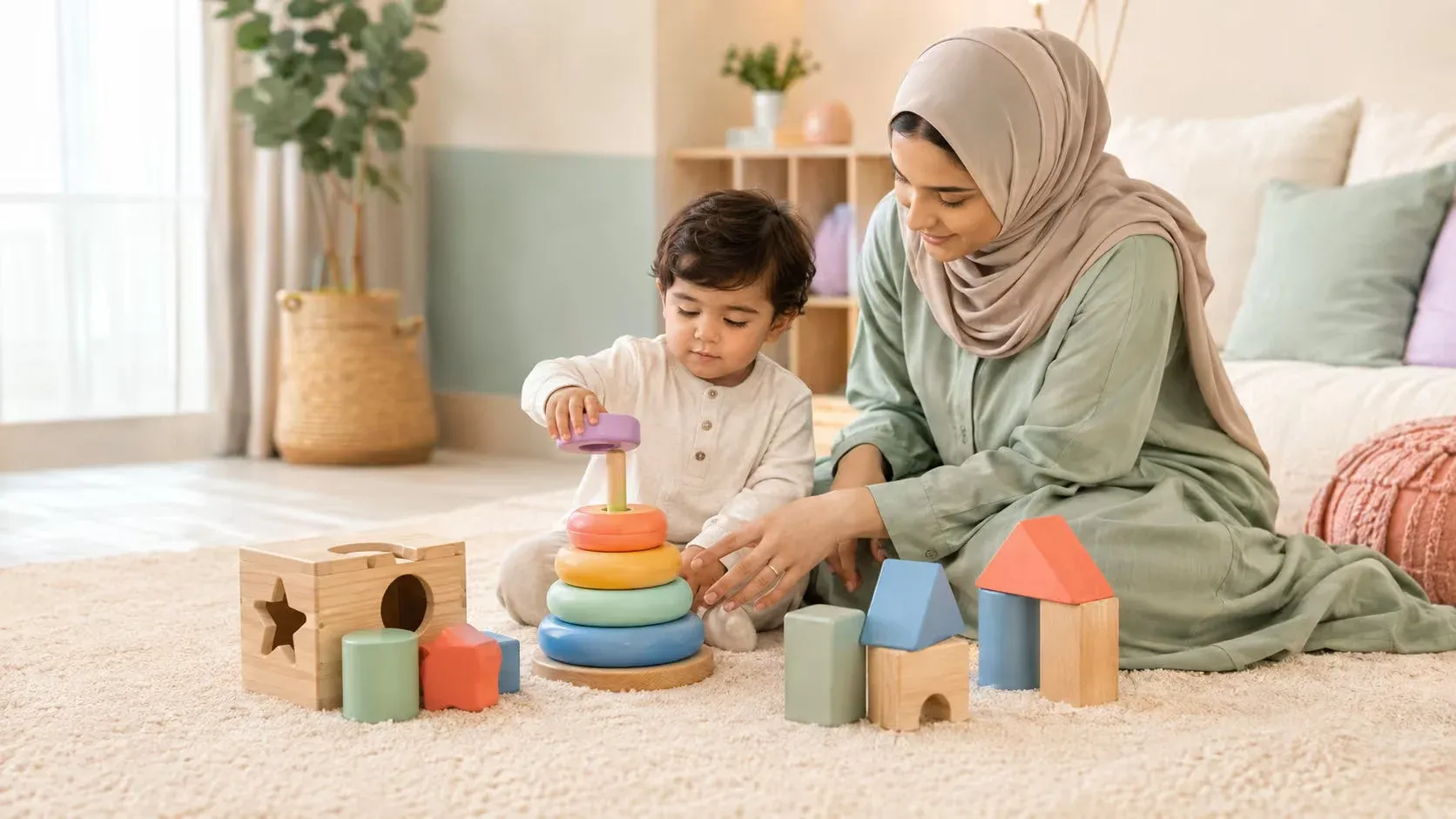
Choosing an educational toy for your child doesn’t mean looking for the toy with the most colors or activities. The right toy is one that suits your child’s current stage, gives them a simple challenge they can explore, and stays safe during use.
A simple toy like stacking rings may be more useful at a certain stage than a complicated toy with lots of buttons and sounds. So before buying any toy, ask: What can my child do right now? And what’s the next skill this toy could help them try?
It’s also important to remember that children don’t develop at the same pace. The ages in this guide are approximate, while the age printed on the toy’s package and its safety warnings remain the main reference, especially for children under 3.
What Makes a Toy Right for a Child’s Age?
Any educational toy can be evaluated through four key elements:
1. Safety
The toy should be age-appropriate and sturdy, and free of small pieces or parts that could easily come off. You also need to watch out for small batteries, magnets and long cords, especially with children under 3.
2. Level of challenge
A child may quickly lose interest in a toy that’s too easy, while a toy that’s too hard may cause frustration. The best choice is a toy your child can start exploring on their own, needing just a little help now and then.
3. Way of playing
Look for toys that let your child touch, try, repeat and make small decisions while playing. The more actively your child takes part, the richer the experience becomes compared with just watching lights or listening to sounds.
4. Can be used in more than one way
Some toys have only one answer, while others can be used in many ways. Blocks, for example, can be stacked, arranged, or turned into a house or a bridge during pretend play.
Toys for Ages 6 to 12 Months
During this stage, babies begin exploring things with their hands and mouths, and try to reach for toys, grab them and pass them from one hand to the other. They may also start to understand the simple link between an action and its result.
Good choices for this stage
-
Large, lightweight stacking rings.
-
Soft balls or balls with different textures.
-
Cloth books or sturdy board books.
-
Large stacking cups.
-
Toys that make a gentle sound when moved.
-
Simple toys that encourage your baby to reach and grasp.
Choose lightweight toys that are easy to hold and don’t contain detachable pieces. At this stage, your baby doesn’t need to be taught colors or numbers directly; sensory exploration, grasping and repetition are learning experiences in themselves.
Toys for Ages 12 to 18 Months
Between 12 and 18 months, many children start putting things into containers and taking them out, stacking a few pieces, pushing or pulling toys, and imitating some simple everyday actions.
Good choices for this stage
-
Toys for putting large pieces in and taking them out.
-
Simple shape sorters with large pieces.
-
Stacking rings or cups.
-
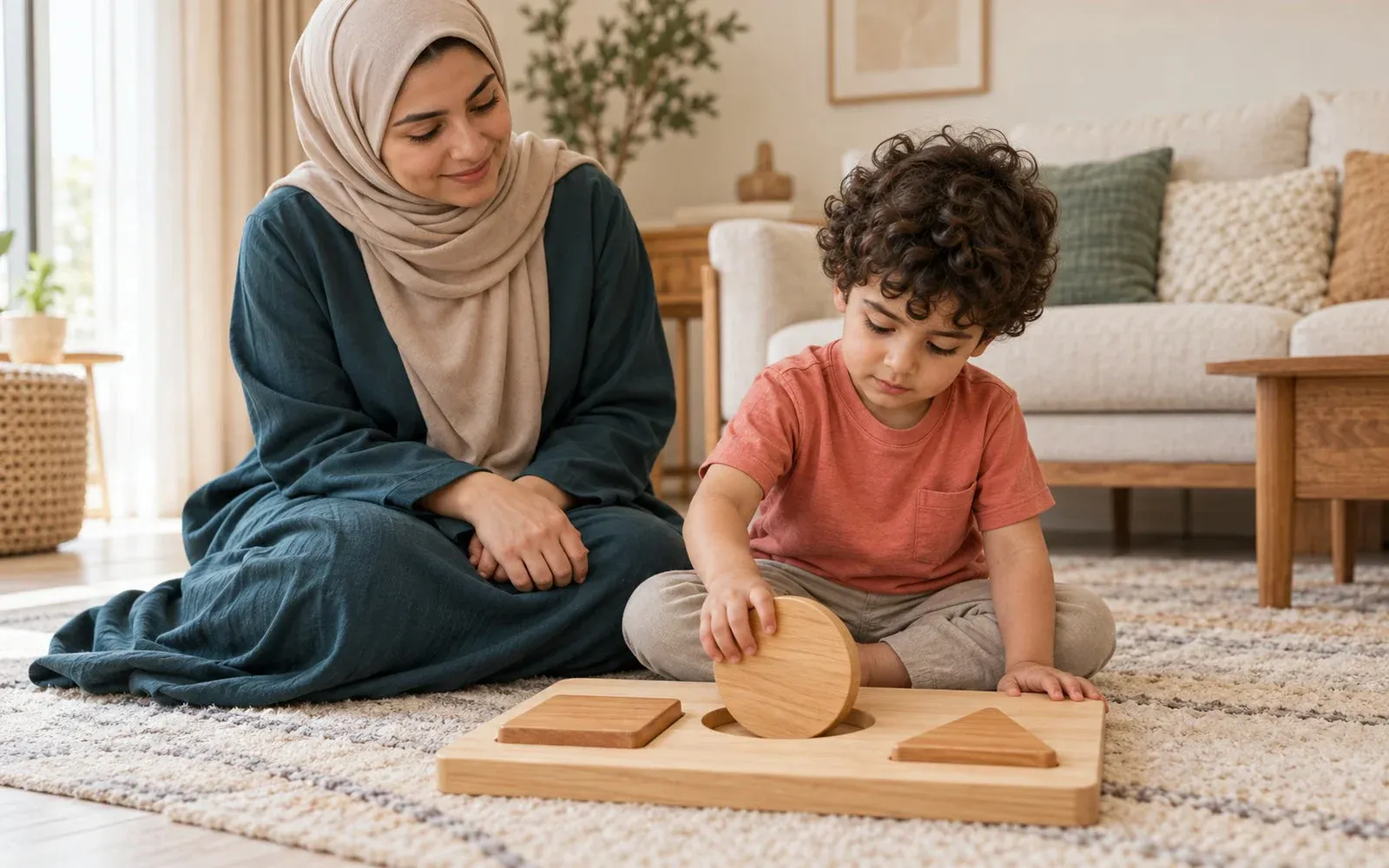
Simple wooden puzzles with large knobs.
-
Large, easy-to-push cars.
-
Simple pretend toys, like a phone or large kitchen utensils.
Don’t expect your child to use the toy the “right” way the first time. They may prefer to take the pieces out, throw them or bang them together, and that’s a natural part of exploring before learning to match and arrange.
Toys for Ages 18 to 24 Months
At this stage, children use their hands more precisely and begin to understand short instructions and try different solutions to simple problems. Pretend play also shows up more clearly.
Good choices for this stage
-
Sorting toys by shape or color.
-
Large puzzles with a few pieces.
-
Large building blocks.
-
Safe toys for opening, closing and turning.
-
Large animals or vehicles for pretend play.
-
Simple matching games.
-
Safe, age-appropriate musical instruments.
You can support your child by describing what they’re doing instead of handing them the solution. For example, say: “This piece is round” or “Try another hole.” That way, your child stays the one leading the experience.
Toys for Ages 2 to 3 Years
Between ages 2 and 3, a child’s imagination expands, and they become able to combine more than one step during play. They may start to categorize things, build simple structures, and use toys to act out situations from everyday life.
Good choices for this stage
-
Puzzles with large pieces and a suitable progression.
-
Sorting and matching games.
-
Blocks and shapes for open-ended building.
-
Kitchen, doctor and shopping play sets.
-
Animal, vehicle and large figure toys.
-
Early counting games, without pressure or testing.
-
Age-appropriate activity boards.
-
Toys that help with naming colors, shapes and objects.
At this age, play shouldn’t be turned into a constant lesson. You can introduce a simple idea and then let your child choose how to carry on. The goal isn’t for them to follow instructions perfectly, but to try, discover and try again.
How Do You Know the Toy’s Level Is Right?
Watch your child over several attempts, then look for these signs:
-
They start exploring the toy without waiting for a long explanation.
-
They can do part of the activity on their own.
-
They try again when it doesn’t work the first time.
-
They discover new uses for the pieces.
-
They come back to the toy at different times.
-
They need a little help rather than relying completely on an adult.
If your child can’t do anything without constant intervention, the toy may be ahead of their current stage. Keep it and try offering it again in a few weeks.
And if they master it quickly, that doesn’t mean you need to get rid of it. You can change the way of playing, such as arranging the pieces by color, building a new shape, or bringing the toy into a pretend story.
A Safety Checklist Before Buying a Toy
Before making a purchase decision, check the following points:
Read the recommended age
The age printed on the package isn’t only about how hard the toy is; it may also depend on the size of the pieces and how the toy is used. Don’t ignore age warnings, even if your child seems advanced in their skills.
Check the size of the pieces
Toys intended for children under 3 must not contain small pieces that could be swallowed. Also check for pieces that could come off if the toy is dropped or pulled.
Watch out for magnets and batteries
Make sure there are no small exposed magnets, and that the battery compartment, if there is one, is secure and can’t be opened by your child.
Check the wood and edges
With wooden toys, make sure the surface is smooth, with no cracks, splinters or sharp edges. And don’t assume every wooden toy is safe or educational just because it’s made of wood.
Check cords and strings
Avoid long strings or loops that could wrap around your child, and always follow the age and the method of use specified for the toy.
Keep an eye on the toy’s condition
A toy may be sound when you buy it and then get damaged with use. Check it regularly, and stop using it if a piece becomes broken or loose.
Is a Wooden Toy Always Better?
Not necessarily. Wood often stands out for its durability and natural feel, but the material alone doesn’t determine educational value.
A simple, open-ended plastic toy may be better than a complicated wooden toy that doesn’t suit your child’s age. What matters most is manufacturing quality, safety, and how much your child actually takes part in the play.
The same goes for the word “Montessori.” Not every wooden or softly colored toy is a Montessori toy, and having that description on a product doesn’t guarantee it’s right for your child.
Does a Child Need Lots of Toys?
No. Too many choices can make a child jump quickly from toy to toy without exploring any of them in depth.
You can set out a small, varied selection, then swap some of them from time to time. Try to make sure the selection includes a toy for movement, another for building or sorting, a book, an open-ended toy, and an option for pretend play suited to your child’s age.
And more important than the number of toys is having someone who talks with your child, describes what’s happening, joins in for a few moments, and then leaves them room to try on their own.
Quick Questions Before Choosing Any Toy
Before adding a toy to your shopping cart, ask:
-
Does the recommended age suit my child?
-
Does it contain small pieces or parts that could come off?
-
Can my child interact with it on their own?
-
Is the level of challenge right for their current skills?
-
Does it allow for trying and repetition?
-
Can it be used in more than one way?
-
Will I be able to clean and inspect it easily?
If the answers are clear and reassuring, you’re most likely looking at a good choice.
Frequently Asked Questions
Should I buy a toy meant for an older age because my child learns quickly?
You can offer a slightly higher challenge as long as the toy stays safe, but don’t go past age warnings related to small parts, magnets or batteries. Safety matters more than skill level.
What should I do if my child isn’t interested in the toy?
That doesn’t mean the toy is bad. Your child may not be ready for it yet, or the timing may not have been right. Put it away for a short while, then reintroduce it in a simpler way and without pressure.
How long should my child play with a toy?
There’s no single amount of time that suits every child. Some explore a toy for a few minutes and then come back to it later. Pay attention to the quality of the interaction instead of counting the minutes.
Are educational toys alone enough to develop a child’s skills?
Toys are helpful tools, not a substitute for conversation, movement, reading and everyday interaction. A toy usually becomes more useful when an adult joins in at first and then gives the child a chance to explore independently.
The Bottom Line
The best educational toy isn’t the most complicated or the most expensive. It’s the safe toy that reaches your child at the right time and gives them room to try, choose and repeat.
Start with your child’s current skills, choose a simple challenge, and watch how they use the toy. When play is fun, safe and driven by curiosity, learning happens naturally.
Explore the collection of educational toys selected for children at Giggly, always paying attention to the recommended age and the safety guidance for each product.