Nature Play for Kids: 8 Simple Ideas Without a Lot of Gear
A practical guide to playing and exploring near nature: 8 simple ideas, minimal gear and safety guidance, with a scientific review that explains the findings and their limits without exaggerated promises.
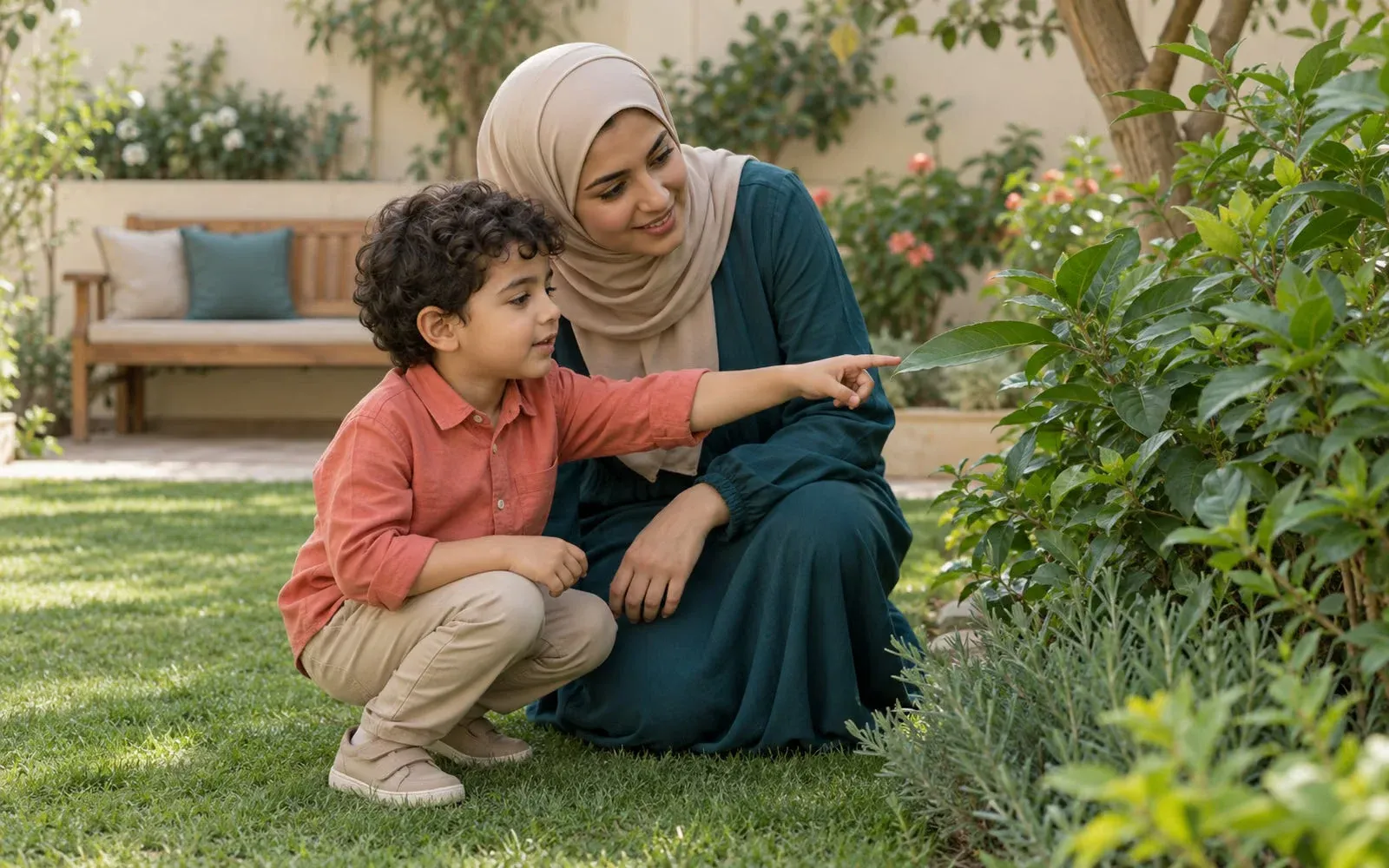
You headed out to the park, but your child didn't go to the slide. They stopped at the shadow of a leaf on the ground, then watched a bird, then went back to the same spot. It may seem to you that they haven't “played” yet, so you start suggesting an activity or pulling a toy out of the bag. But exploring itself can be the start of play; not every visit needs a program, tools, or a result to take home with you.
In this guide, we suggest a light approach to making room for play and observation near nature, especially for children in the preschool years. We'll start with what's available and safe, and offer eight ideas you can choose one from, while explaining what the scientific review says and what it doesn't prove. The goal isn't to turn the park into a classroom, or to prove that outdoors is better than indoors, but to add a realistic option to the family's day.
What do we mean by nature play?
Free play near plants, trees or natural ground can include following shadows, imagining a story in a green space, or choosing a spot to observe and then changing it. The difference from an organized activity is that the child has room to decide what to do and how to keep going. Having an adult set safety boundaries doesn't cancel that out; the freedom here is within a clear, suitable space.
Organized soccer or an outdoor science lesson have value too, but they aren't the same thing the main review in this article examined. Likewise, not every moment spent watching from the window equals free play outside the home. You can enjoy both without claiming they have the same effects.
And observing doesn't always require touching. You can follow the movement of leaves or listen to sounds while leaving things where they are. We don't encourage the child to taste a plant, pick up small pebbles, or approach an unfamiliar animal to make the experience “sensory.” Choosing a simple activity doesn't mean paying less attention to safety.
What does the scientific review say?
In 2020, Dankiw and colleagues reviewed the findings of 16 studies on free play in nature for children aged 2–12. The results pointed to encouraging opportunities for physical activity and some pretend play behaviors. But the studies differed in their design, their definition of a natural environment, and their measurement methods; so the researchers used a descriptive summary, not a meta-analysis that combines the results into a single numerical effect.
The quality of the evidence was a concern: problems with samples, measurement, reporting of results, and comparison groups. In a number of studies, the comparison was between two outdoor environments, not between nature and home. So we don't reduce it to a confirmed causal relationship, and we don't say nature always outperforms a traditional playground. Nor does it prove that our suggested activities raise intelligence or treat attention difficulties. Also, the age range is wider than the preschool years, so we don't generalize every finding to a two-year-old. The full review in PLOS ONE.
The American Academy of Pediatrics offers ideas for getting outside and exploring near home, while emphasizing the need for suitable places for children. We use it as a supporting guidance source, not experimental evidence for every idea in this article. Guidance on playing outside.
Before the activity: choose the place and conditions
Start with a space you can supervise
It could be a nearby park or a suitable ground-level yard. Check the place before the child gets absorbed: vehicle traffic, edges, open water, glass, animal waste, thorny plants, and gardening tools or materials. Choose an area with clear boundaries, and don't treat an unsafe space as suitable just because you'll be watching.
State a simple rule: “We stay here, in front of me,” while pointing to mark the area. If the child needs you closer, stay near enough to step in. Don't count on them always understanding or remembering the warning. And adjust the plan when it's crowded or the place changes; you don't have to finish the activity you planned.
Check the sun, heat and air quality
Choose shade and weather-appropriate clothing, and prepare sun protection based on the child's age and the product's instructions. The American Academy of Pediatrics recommends covering skin as much as possible, limiting exposure during peak sun hours, and using appropriate sunscreen on exposed skin. Sunscreen isn't a reason to stay in the sun longer. Sun protection guidance.
In heat or air pollution, check local alerts and adjust or postpone your outing. Bring water and allow for rest; don't make finishing the activity more important than the child's comfort. For a child with asthma or a health condition, follow their doctor's plan about going outside. Heat and air quality guidance.
Bring outing essentials, not a full activity bag
Your usual essentials are often enough: water, suitable clothing, and what you need for cleanliness and comfort. You can bring paper and a chunky, age-appropriate pencil if the child wants to draw, but there's no need to take them out right away. You don't need tools to collect everything you see, or to buy a special exploration kit.
8 simple ideas: pick one and follow the child's interest
The following ideas are home examples prepared by Giggly, not a program tested by the scientific review. They can turn into free play, or remain short moments of observation. Don't impose an order, and don't expect the child to love every option.
1. A walk led by the child's interest
Within the safe space, let them choose what they want to look at. They may walk a few steps and then stop, or go back to a tree they saw a moment ago. Instead of “Come on, let's go see something else,” you can say: “That leaf caught your eye.” Make stopping part of the walk, not a delay that needs fixing.
If they point to a detail you can't see, get down to their eye level. It might be a shadow or a moving branch. They don't need to know the plant's name for the conversation to continue. And if they ask about a name you don't know, say so honestly; you can look it up later. And don't guess whether a plant is safe to touch or eat based on how it looks.
The walk can end at a single detail. What matters is that the child found room to choose. And if they want you to lead the start, offer a small suggestion and then leave room for change: “Shall we stop at the tree?” Don't turn the route into a race or a list of required stops.
2. Discovering shadows from a steady, safe spot
When leaf shadows appear on a level path, look at them together. The child might say it's a fish or a big hand. Follow their idea, or point out a shape close to you. You don't need a single correct answer, or to stand in strong sun to make the activity nicer.
If they want to move, they can move a hand and watch its shadow within the suitable space. And if they're happy just looking, that's another option. Avoid chasing shadows near the road or on unstable ground. Don't ask them to look at the sun to find the light source; noticing the shadow is enough.
When you return to the same spot at another time, the shadow may look different. You can notice the difference without a long lesson on the Earth's rotation. And if no clear shadow appears, move on to another idea; the walk isn't an experiment that has to succeed no matter the conditions.
A child points to leaf shadows on a level path with their mother beside them3. Listening for one sound
Choose a comfortable, relatively quiet spot. Ask if they want to listen, then leave a moment without talking. They might hear a bird, rustling leaves, or a distant sound. They can point in its direction or describe the sound in their own way. Don't ask them to close their eyes if they're not comfortable with that.
There's no need to know the source of every sound. You can say: “We heard a sound from over there.” And if a bird appears, watch it from a distance without catching or chasing it. Respect the place and the creatures in it, and don't make getting closer a reward for good observation.
If the sounds or crowds bother them, move to a quieter spot or end the idea. This isn't training to tolerate what bothers them. Some children prefer talking or moving to sitting silently; you can listen during a slow walk instead of asking everyone to do it the same way.
A mother and child listen to a bird from a wooden bench in the home garden4. Following what moves and what stays still
From where you are, notice a branch moved by the wind and a still trunk, or a leaf that flutters and another that doesn't move. You can comment: “That one's moving a little.” Don't turn the activity into a test of classifying everything, and don't ask the child to move the plants themselves to show the difference.
They may invent a story: the tree is waving, or the leaves are dancing. Join in with a short addition if they like, then wait. And if they prefer following the movement without a story, leave it as it is. Exploring isn't supposed to be educational out loud every moment.
For a child who likes acting out the idea, they can imitate a leaf's movement with their arms on safe ground. Respect their abilities and their need for support, and don't make the movement a balance contest. A child who takes part sitting down can describe the movement or imitate it with their hand; walking isn't required to take part.
5. A little story that starts from the place
If the child says the tree is a bird's home, ask if they want a story about it. They might imagine the bird returning home, or move on to another idea. You don't need figures or costumes. The story can be just talk, and natural things stay where they are.
Don't push them to go into bushes, touch nests, or climb a tree so they can act out the story. Imagination doesn't require putting them in danger or disturbing animals. They can act out the return home with their hand or on the level area, or finish the story later at home.
If you'd like examples of joining in your child's story without taking it over, see the pretend play guide. Our angle in this article is starting from the surrounding environment; not every observation has to turn into a story or a long conversation.
6. Comparing by looking, without collecting things
You can look at two different leaves where they are, or compare a tall tree with a shorter shrub. Say: “This one's wider,” if the difference is clear, or let the child choose what they notice. There's no need for precise names for every color and texture, or to pick leaves to complete the comparison.
If they want to remember something, you can describe it or take a photo of it without posting the child's picture. And in a place that bans photography or getting close to plantings, follow the rules. Don't assume that what's fallen on the ground is fair game, clean or safe; looking can be enough.
This option works well when you don't want to deal with small pieces or unknown materials. Don't give pebbles, seeds or small fruits to a child who puts things in their mouth. For a broader reminder about age and small parts, read the safety guide for children under three; nature is no exception to caution.
7. Returning to a favorite detail
The child may want to see the same spot on every visit. Allow it if it stays safe and accessible. Maybe they're interested in a particular leaf, sound or view, and you don't need to add something new each time for the outing to be worthwhile.
If they notice a change, follow it: “Today there are leaves on the ground.” And if they don't notice, don't quiz them about what was here yesterday. You can offer one observation and leave it there. Don't set up a schedule for documenting nature before they show an interest in documenting.
Repetition doesn't rule out optional variety. You can suggest another nearby spot, then accept their choice. For ideas on handling repetition without rushing, see Why does my child repeat the same game?. We don't need to count visits here or set a time when the idea runs its course.
8. An optional extension at home
After you get back, the child may want to draw what they saw or build an imaginary tree from large blocks. Offer paper and age-appropriate colors if they ask, or listen to what they remember. Don't make drawing a chore after every outing, and don't expect a realistic picture.
If they draw lines and say it's the wind, you can describe their idea instead of correcting it. And if they don't remember anything or want a different activity, the outing ends on its own. There's no need to extract “proof of learning” from every visit, or to ask the child in front of others what they got out of it.
You can also open a book you have with a tree or a bird in it if they like connecting the two experiences. Make it a suggestion, not a condition for finishing the day. The lighter the extension stays, the easier it is for the family to choose what suits them without extra gear.
A child draws a tree at home after exploring nature while their mother watchesWhat if there's no safe park available?
Not every home has a yard, and not every neighborhood has an accessible green space. This is a problem of access, not a failing on the parents' part. Don't use an unsecured roof or balcony to make up for it, and don't leave the child near an open window or things they can climb on.
You can watch the sky or a tree through a secured window, or talk about a nature picture in a book. These are alternatives for connection and observation, not the equivalent of the outdoor free play the review covered. And when a safe visit becomes possible, you can start without trying to make up for all the previous days.
If you find an accessible space with mobility support or a nearby bench, plan around what the child can do there. Don't make running or touching the ground the standard for taking part. They may choose to watch birds or shadows from a fixed spot, and take part by pointing, talking or their usual way of communicating.
The end of the outing is part of the plan
Before leaving, give a simple heads-up tied to what you're doing: “We'll look at the tree and then we'll go.” If time allows, let them choose one last thing to look at. Don't promise to stay until they get bored if you know you have an appointment, and don't start a new idea right before leaving.
When you get back, wash hands with soap and water, especially before eating and after touching soil or animals. The CDC recommends scrubbing for at least 20 seconds. Help the child according to their ability, and make hygiene a clear routine without making them afraid of everything in nature. Handwashing guidance.
If they're tired, don't start with lots of questions about the outing. They can have what they usually need and rest, then talk if they want. The end of an outing doesn't need an educational review, or praise for how well they put up with the heat or the walk; rest and safety come before finishing activities.
A light checklist for your next visit
- A clearly bounded space you can supervise, with hazards checked.
- Suitable weather and air conditions, and sun protection as needed.
- Water and comfort and hygiene essentials, without a big bag of supplies.
- One backup idea, not an eight-stop program.
- Room for the child to stop or change their mind.
- A plan for leaving and washing hands.
After the visit, think about what made it easier for you: Was the place suitable? Did you bring more than you needed? Was the timing comfortable? Adjust one condition next time. Don't measure its success by the number of plants the child named or how long they sat quietly.
Frequently asked questions
Do we need a forest or a long trip?
That isn't necessary for these ideas. A nearby, safe space with natural elements can open the door to observation. Choose what you can reach without strain or unnecessary costs.
Is nature play always better than the playground?
The review doesn't prove that. Comparisons and results varied, and some physical activity results were similar. Choose the place that suits the child and the family, and feel free to mix up the options.
How many minutes should we spend outside?
This article doesn't set a duration that guarantees benefits. Choose a time that suits the conditions and the child's comfort, and follow general guidelines on age-appropriate physical activity separately from these ideas.
Should I have them collect leaves and rocks?
That isn't necessary. Looking can be enough. Avoid small pieces, unknown materials and contaminated areas, respect the place's rules, and don't allow tasting.
My child doesn't like dirt. Should I insist?
No. They can observe from a path or a bench, without touching or being forced. Choosing an experience they're comfortable with is better than turning the outing into a test of tolerating a texture that bothers them.
Do these activities treat distractibility or anxiety?
We don't present them as treatment. The review's findings don't prove that, and going outside isn't a substitute for an evaluation or care plan when there's a health or developmental concern.
Should I buy special exploration tools?
You don't need them to get started. You can look, listen and imagine without equipment. And if you use a tool, check the age rating and safety; an educational label doesn't guarantee it's useful.
Do we have to draw or talk after getting back?
No. The home extension is optional. The child may want rest or a different activity, and a calm visit without a finished product can be a complete experience.
The takeaway
On your next outing, prepare the place and safety, then lighten the program. Follow a detail the child chose, and leave room for movement, observation or imagination. You don't need a new activity every visit, and we don't promise a specific developmental outcome. Nature is one of many play options, and you can bring it into family life with whatever is available to you, without pressure or a lot of gear.
Scientific and guidance sources
- Dankiw and colleagues, 2020: The impacts of unstructured nature play on health in early childhood development: A systematic review. PLOS ONE, 15(2): e0229006. DOI: 10.1371/journal.pone.0229006. The methods, results, discussion and limitations of the review were examined in the full text.
- American Academy of Pediatrics: Playing Outside: Why It’s Important for Kids, guidance for parents, updated April 6, 2026.
- American Academy of Pediatrics: Sun Protection.
- American Academy of Pediatrics: Heat and Air Quality.
- CDC: About Handwashing.