My Child Says “I Can't”: 8 Steps to Encourage Trying During Play Without Pressure
How do we support a child when play gets hard? 8 steps for specific encouragement, simple help and respecting breaks, with an original study, the limits of its findings, and practical examples for home.
Your child is trying to fit a piece into a puzzle, and it won't settle into place. They try it again, then push the board away and say, “I can't.” You reach out to finish it, or quickly say, “You're so good at this, try again.” Both responses are understandable; it's hard to watch a child we love feel frustrated. But between solving the task for them and asking for more attempts, there's a calmer space: understanding what they need, offering help that fits the moment, and noticing what they've actually done.
This guide is for parents who want to encourage their children, especially in the preschool years, when playing, drawing or putting things together gets hard. It doesn't offer a recipe for raising a child who never gives up, and it doesn't treat every pause as a problem. We'll try short phrases and steps for home, while keeping research findings separate from practical suggestions. Sometimes the right step is another try, sometimes it's changing the approach, and sometimes it's taking a break.
Trying isn't a test of the child's character
When a child abandons a hard toy, that alone doesn't tell us whether they lack persistence. The piece may be heavy, the board may slide, the instructions may be long, or the activity may no longer interest them. Or maybe they wanted an adult to join in and didn't find another way to ask. Before describing them as someone who “gives up quickly,” look at the task and its circumstances.
Ask yourself: Can they do part of it? Do they run into the same obstacle every time? Do they even seem ready to play right now? These are questions about how things are set up, not a diagnostic tool. We don't need to count attempts or compare them with a sibling's attempts. What matters is that there's a real chance to take part, and that the child can still ask for help or stop.
Nor should every bit of free play be turned into a goal to achieve. The child may want to line up the blocks instead of building a tower, or place the puzzle pieces next to the board instead of fitting them in. If what they're doing is safe, you can follow their idea. But when they themselves want to finish something and hit an obstacle, that's where encouragement and support become our topic.
What does the original study say, and what doesn't it prove?
In a longitudinal study published in 2013, Gunderson and colleagues followed 53 children and their families in the Chicago area. The researchers analyzed praise in home interactions at 14, 26 and 38 months, then measured the children's attitudes toward challenge and toward whether abilities can change at ages 7–8. These attitudes were more positive when a higher proportion of praise in the early years was about actions, effort and strategies.
But the study is observational: this is a correlation, not proof that the praise caused the outcome. The child's characteristics, family interactions and other factors may contribute, and a single sample isn't enough to generalize the findings to all cultures. The study also didn't find the expected association between praise for fixed traits and later attitudes; so it can't be used to claim that the word “smart” on its own harms a child. Nor did it test the eight steps below as a program, or prove that they prevent frustration. The original study, and the full-text version.
CDC guidance for parents recommends specific praise in simple words that describe the behavior observed. This is a supporting guidance source, not a trial that proves every home phrase suggested here. Guidance on praise and encouragement. We draw on the idea to make our comments clear and honest, and leave expectations about the outcome open.
8 steps to encourage trying without pressure
1. Understand the obstacle before you reach in
Look at what actually happened: Did the child try to put the piece into a different slot? Did the board slip every time they pressed? Did they ask for help after trying, or did they not understand how to start? The problem may lie more in how the materials are set up than in the child's skill. Put the board on a stable surface and bring the materials closer to them before adding more words.
You can say: “The board keeps moving,” instead of “You're not focusing.” The first describes something that can be changed; the second pins an explanation on the child. If you don't know the reason, stick with a simple observation: “That piece hasn't gone in yet.” There's no need to offer three explanations and solutions at once, or to ask the child to explain exactly why they're upset.
And if the challenge is far beyond their current ability, you can choose a simpler version. See the guide to choosing a toy that suits your child's age, and follow the safety warnings on the product. Simplifying the task is a practical decision; it doesn't need to be seen as a step back or a failure.
2. Acknowledge the frustration before encouraging
When the child says “I can't,” we don't have to respond right away with “No, you can.” We can start with: “Looks like it's hard for you right now,” or “You got upset when the tower fell.” If they correct our interpretation, we listen. Acknowledging here doesn't mean we've agreed to a permanent verdict on their ability; it's a response to the moment they're going through.
Keep the words few, especially if they're upset. They may need you close more than an inspiring sentence. Offer a calm presence or a hug if they want it, and don't impose touch they don't want. Once they've calmed down, you can ask: “Want me to help with something small?” And if they're not ready, the activity can wait.
These are suggested home examples, not a therapeutic script. The goal is for encouragement not to become a way of denying their feelings. We don't say “There's nothing to be upset about” while they're upset, and we don't ask them to smile before they're allowed to keep playing. A child can be frustrated and deserve support at the same time.
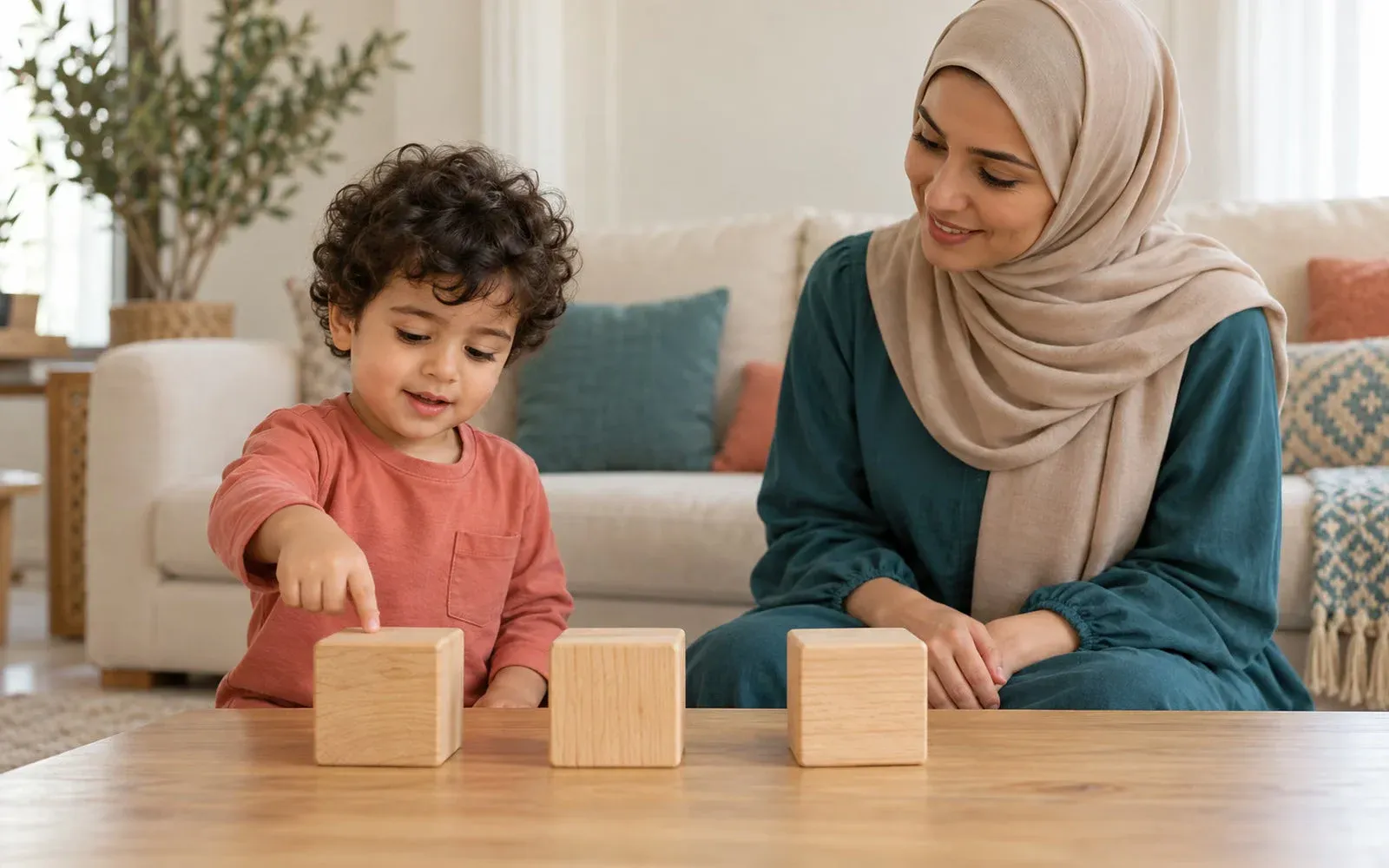
A mother listens to a frustrated child next to their blocks and gives them time to rest3. Notice the specific action instead of passing general judgment
Say what you saw: “You turned the piece and tried from the other side,” or “You put the block back after it fell.” Not every move needs praise. When you choose to comment, tie it to something real, in a comfortable tone that suits the child. A calm description may be enough for one child, while another may enjoy a smile and more enthusiasm.
Words of love and pride can stay natural, with details added when needed. Instead of your whole response being “Good job,” say: “I saw how you held the board with your other hand.” Don't turn this into policing every word parents say. The idea is to offer clear information about the attempt, without promising that the child will become persistent because of a single sentence.
And pay attention to honesty: don't say “You tried so hard” if they didn't try, and don't praise sticking with an approach that hurts them or can't work. You can also appreciate their asking for help: “You told me where you wanted help.” Help isn't something that has to be hidden for the achievement to count.
4. Offer the least help they need, then hand them the turn
Support doesn't necessarily mean fitting the piece in for them. It may be enough to move an object that's in the way of their hand, hold the board steady, or point to a spot they can check. Ask briefly: “Should I hold the board while you try?” If they agree, give that help and then watch; don't automatically expand it into managing every step.
And if they ask to see how it's done, you can show it once and then hand the piece back. Avoid taking their hand and moving it if they refuse. They may prefer that you do one part and they do another, and that's fine. Describe clearly what each person did, instead of saying they did the whole activity on their own.
There's no perfect level of help for all children. Some need a simpler setup, adapted tools, or more support. Don't measure the quality of play by the complete absence of adult involvement. Choose what makes the child's participation possible and comfortable, and if you're following a support plan from a specialist, ask them about suitable adjustments.
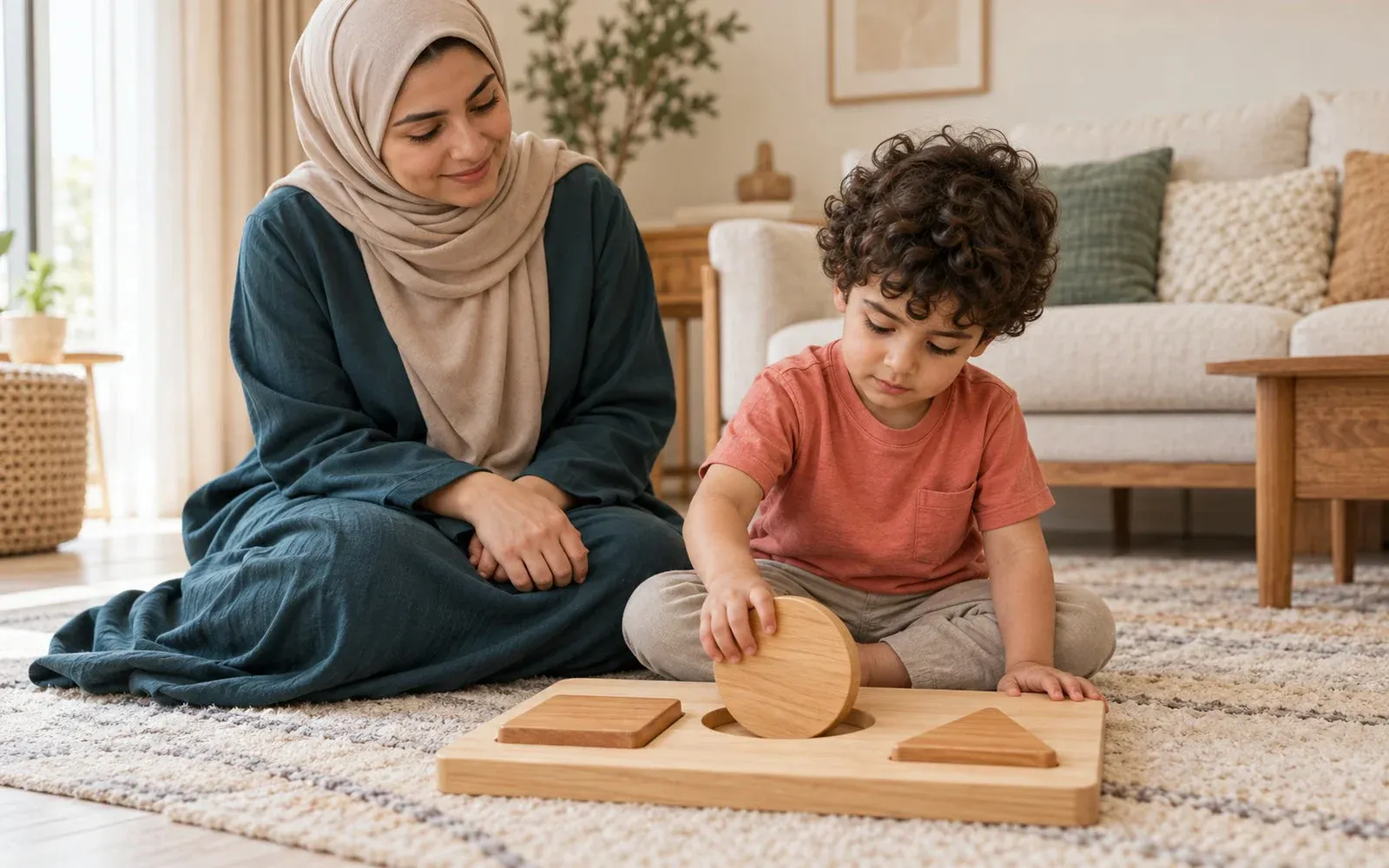
A mother holds the edge of the puzzle board steady while her child tries turning a large piece5. Open up another approach instead of repeating “try harder”
If the child pressed the same piece the same way and it didn't work, they may not need another identical attempt. You can say: “Maybe we can try turning it,” or offer two clear choices: “Should we hold the board steady, or try a different piece?” Keep it to one suggestion, and leave them the chance to use it or turn it down.
In building, changing the base may work better than placing the top block for the fifth time. In drawing, you can swap a sheet of paper that keeps slipping or a pencil that's hard to hold. We don't attribute every obstacle to a lack of effort. Sometimes the activity needs adjusting, and sometimes the goal can't be reached with the materials at hand at all.
For more on varying the same activity, read the guide to repetition and fresh play. The difference here is that the child wants to reach a result and is finding it hard; we don't add a new challenge every time we see repetition, and we don't change their comfortable play just because we want to develop it.
6. Make the starting point small and clear
Instead of presenting a board with many pieces along with “Put it all together,” choose a part they can start with: one piece close to its spot, or two blocks for the base of a low tower. Make this an optional start, not a hidden task that will immediately expand to finishing everything. If the child is satisfied with it, that can be respected.
Think about the difference between the child's goal and yours. Maybe they want to put a car under a bridge, while you want to build a neat, beautiful bridge. Help them reach their idea with the simplest safe setup. Don't let the finished look in store photos become the standard for what they should make at home.
Also pay attention to the materials: large parts that are easy to hold, a space they can reach, and age-appropriate materials. Don't use small pieces to simplify the activity for a younger child, and don't ignore the product warnings. Encouraging effort starts with a suitable opportunity, not with making things harder to show how much they can endure.
7. Allow breaks, and an ending that doesn't include a complete accomplishment
Say: “We can take a break and come back if you want.” Don't set a required number of attempts, or block moving on to another activity until the game is finished. You can put the pieces in a tidy spot to come back to later, but coming back isn't a promise the child has to keep.
If they ask to stop the activity, respond calmly: “We're done for now, let's put the pieces here.” Don't turn tidying up into a punishment for stopping. They can help tidy up a little according to their ability, such as putting two blocks in the basket while you gather the rest. And the session ends without a speech about giving up or a comparison with someone who finished more.
And don't conclude from one day that your approach didn't work. Maybe the best thing that happened was the child saying “Help me” instead of pushing the materials away, or choosing a break before their anger escalated. These are observations about the session, not proof of improvement in a general skill or a measure of developmental progress.
8. Celebrate the result without making it a condition for closeness
If the piece goes in, enjoy it with them: “It went in! After you turned it, it fit right in.” And if it doesn't, you can stay available and kind too. Don't limit your time with them to the moments when they get something right, and don't make encouragement a promise of a reward for every piece they fit.
Sometimes ask about their experience if they like talking: “Which part did you like?” They may be content just to show you what they made. In drawing, you can listen to their story about the lines instead of judging how pretty it is. These are suggestions for widening the conversation, not questions you must ask at the end of every activity.
And if a hurried phrase slips out, you can simply amend it: “I told you it was easy, but clearly it needs some help.” A perfect parenting performance isn't required. What matters is that there's still room to understand what happened and repair the interaction, without making the child responsible for reassuring you or proving the advice worked.
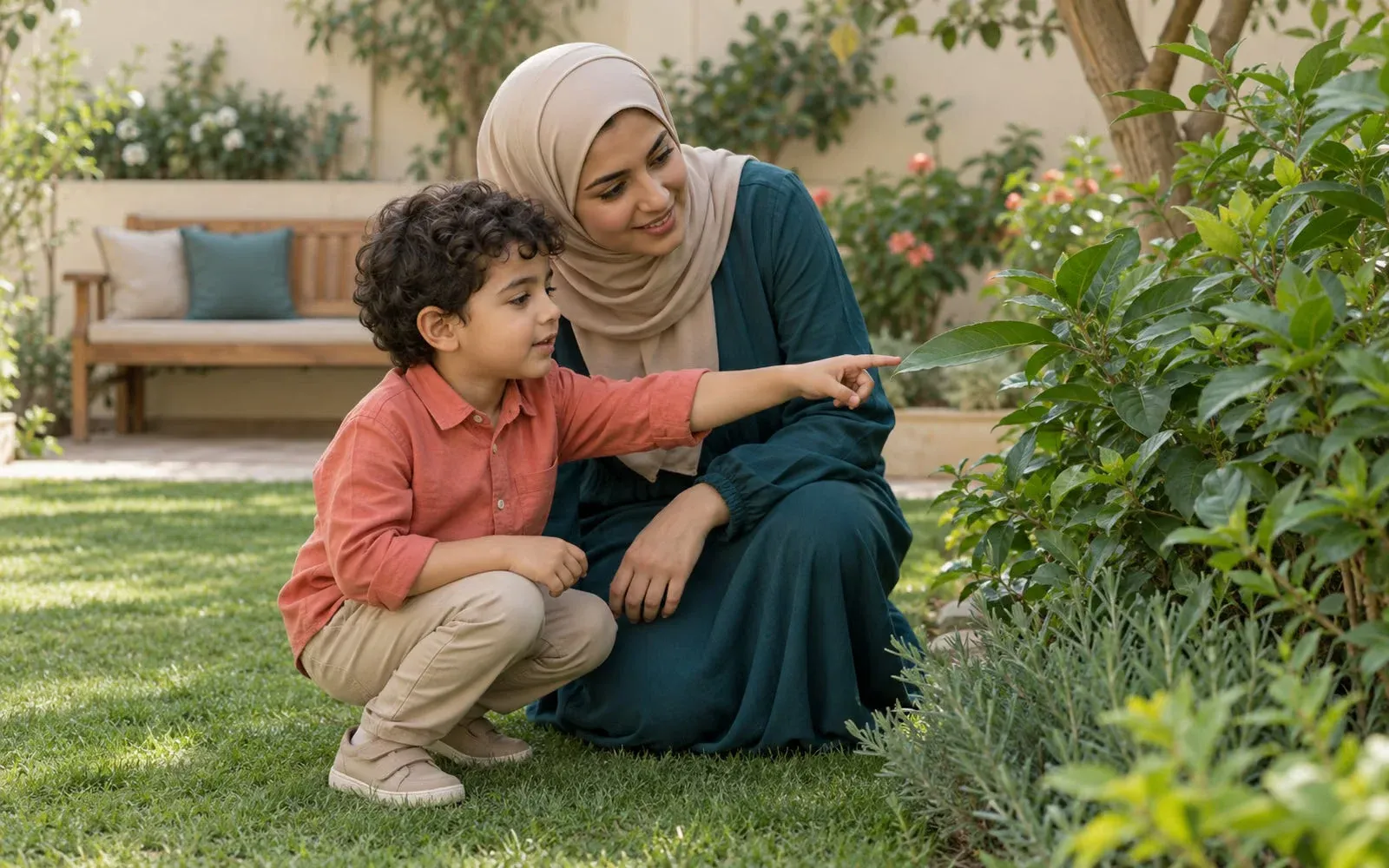
A mother follows her child's drawing with interest without drawing for themA short dialogue when the child says, “I can't”
This is an original example of applying the ideas, not a protocol from the study. Imagine a child who wants to fit in a triangle piece while the board keeps moving on the rug:
- Child: “I can't.”
- Mom: “This piece is giving you a hard time. And the board keeps moving.”
- Mom pauses and listens.
- Mom: “Do you want me to hold the board while you try?”
- The child agrees, so Mom holds just the edge.
- The child turns the piece and tries.
- Mom: “You turned it the other way.”
If the piece goes in, you can share their joy. And if it doesn't, there's no need to repeat the whole dialogue. Offer one hint if they want it, or a break. And if they refuse help from the start, you can say: “I'm here if you need me.” Tone, waiting and help that fits the moment matter more than memorizing a word-for-word script.
How do we handle a drawing that doesn't look like what the child wanted?
A child may draw a car and then say it's bad. Instead of correcting the drawing or making a replacement car for them, ask: “Which part do you want to change?” If they point to the wheels, you can offer another sheet for them to try, or show how to draw a circle on your own paper if they ask. Don't redraw their work without their agreement.
They might also decide the lines are a road for the car instead of the car itself. That's a choice in play, not avoidance that needs to be stopped. And if they want to keep the paper as it is, it doesn't need an explanation for every detail. Let drawing be an experiment and let the idea change, without demanding a beautiful product worth displaying.
How do we adapt encouragement to the child's way of communicating?
For a child who communicates with gestures, you can offer help with a clear gesture and a few words, then wait for their response. Don't require a full sentence before they get it. They may hold the piece out toward you or move their head; follow what they mean, and check gently if you don't understand. And when playing with a child who uses short words, you can offer a simple choice: “Help or a break?” without a string of questions.
A child who loves explaining, on the other hand, may want to tell you what didn't work. Listen to their idea before suggesting yours, and don't turn the conversation into a test: “Why? And how? And what did you learn?” They may suggest an unexpected but suitable approach, or decide to put it off. These are examples of adapting to how a child communicates; they aren't age rules or evidence of the child's developmental level.
What if the adult is in a hurry or tired?
Not every moment is right for sitting down with a new challenge. Before leaving the house, choosing a familiar activity may be easier than offering a puzzle that needs support. And if the activity has started and you have to end it, say clearly: “We have to go now, we'll put it here.” Don't blame stopping on the child being slow, and don't ask them to solve the task quickly to prove they can.
Caregivers can agree on a simple principle: we offer help and respect breaks, and we use clear words about actions. The family doesn't need to memorize the same phrases. If your responses differ, talk them over away from the child instead of debating in front of them who encourages them the right way. Choose an approach you can keep up on ordinary days.
How do we look back on how it's going without constantly monitoring the child?
After several natural play opportunities, look at your own role: Did you wait before solving it? Were your words clear? Were the materials suitable? Did you accept stopping? Pick one adjustment for the next session. You don't need a grade book or to record every attempt, or to buy a new toy every time an obstacle comes up.
CDC guidance on child-led play supports choosing safe, suitable materials, cutting down on instructions and questions, and describing what the child is doing and listening to them. Child-led play guidance. We use this framework to leave them room to decide; the detailed steps in our article are examples of how to apply it, not a guarantee of results.
Frequently asked questions
Should I stop saying “good job” completely?
There's no need to turn the way you talk into a list of banned words. Add an honest description when you want to make clear what you noticed: “Good job, you went back and tried from another side.” We don't conclude from the study that a single word determines a child's future.
Should I praise effort even if the game didn't work out?
You can notice a real attempt or a change in approach without claiming the result was achieved. Say: “You tried turning it.” Then see whether they need help or a break, instead of using praise to push them to keep going.
When should I help, and when should I wait?
If they're safe and absorbed in trying, you can wait nearby. If they ask for support or a clear obstacle appears, offer simple help. Immediate intervention is needed when there's danger; we don't use a learning opportunity to delay protecting the child.
Will simplifying the activity make them depend on me?
You can't judge dependence from a single adjustment. Try adjusting the environment while leaving part of the action to them. And if they need more support, give it without embarrassment, and watch what makes their participation possible.
Should I make them try one last time before stopping?
In optional play, the ending doesn't need a forced attempt. Offer the option of coming back later. Finishing the task isn't a condition for considering your time together a good one.
Should I use stickers or gifts for every attempt?
You don't need them to start with these ideas. You can use attention and specific comments. Reward programs have other contexts; we don't treat them here as a necessary solution for every challenge during play.
What if my child doesn't like praise or clapping?
Soften your tone, and stick to a smile, a short description or listening. Don't impose a hug or a celebration that bothers them. Ask an older child what feels comfortable to them, and follow their response.
Does refusing a hard game mean there's a developmental problem?
Refusing one game isn't enough for a diagnosis. If you have ongoing concerns across different situations, or notice a loss of skills they used to use, talk to your child's pediatrician. This guide doesn't provide evaluation or treatment.
A simple experiment for your next playtime
Choose an activity the child loves and that suits them. When they hit an obstacle, start by describing what happened, then offer a little help if they want it. Notice a specific action and leave the decision to keep going or rest up to them. You don't need to apply all eight steps in one session; a small change can make playtime more comfortable for you and for them.
Sources
- Gunderson and colleagues, 2013: Parent Praise to 1- to 3-Year-Olds Predicts Children's Motivational Frameworks 5 Years Later, Child Development, 84(5), 1526–1541. DOI: 10.1111/cdev.12064. The methods, results and discussion were reviewed in the full text.
- CDC: Tips for Using Praise and Rewards, guidance for parents, updated April 30, 2026.
- CDC: Tips for Child-led Play, guidance for parents, updated April 30, 2026.