How Should You Read with Your Child? 8 Steps to Dialogic Reading Without Turning the Story into a Test
A practical guide to dialogic reading with your child: How do we follow their interest, wait for their response, and build on their words? With research findings and their limits, plus at-home examples without pressure or exaggerated promises.
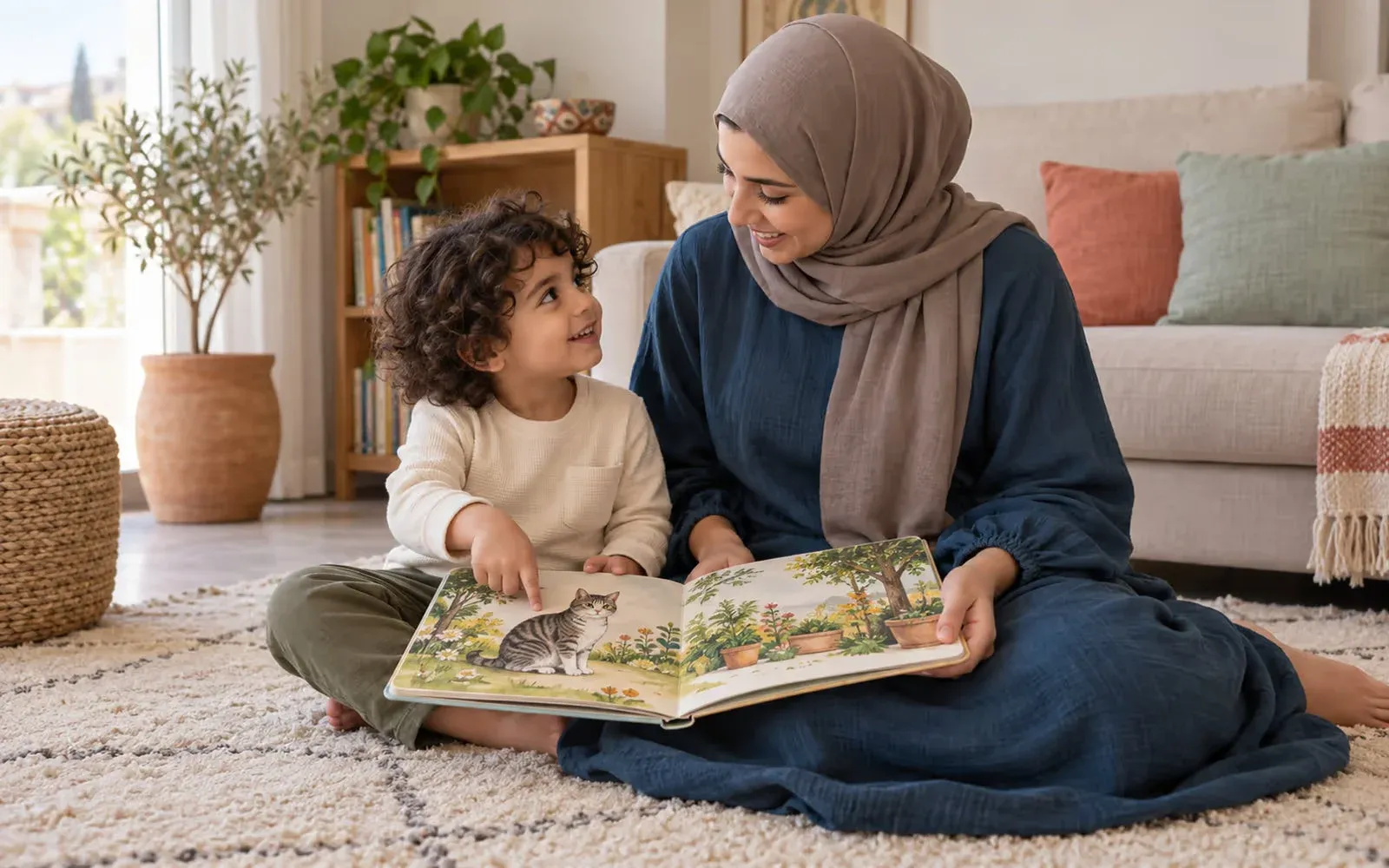
You open a picture book and start reading, but your child interrupts you: “What’s that?” Then they flip back to the previous page, or point to a little cat you hadn’t noticed. It might seem like they aren’t following the story the way they should. But this interruption could be the start of a lovely conversation about the book, not a problem that needs to be stopped.
Reading with a child isn’t a race to finish the pages, or a test of how many words they know. It can become a space where they look, ask, comment, and hear a sentence from you that adds to their idea. This is the direction dialogic reading takes: involving the child in the conversation instead of having them listen the whole time.
In this guide, we separate what the research says from what we suggest for use at home. We don’t promise that any single way of reading will boost intelligence or treat a speech delay. We offer flexible steps, especially for children ages two to five, that can be adapted to your child’s interests and the way they communicate.
What Is Dialogic Reading?
It is shared reading that includes back-and-forth exchanges about the pictures and the story: the adult opens an opportunity to participate, listens to what the child offers, and then builds on it. The child may respond with a word, a sentence, or a gesture. What matters is that what they do has an effect on the conversation, and that the questions aren’t a duty they have to perform.
For example, when your child points to a car, you might say: “A red car,” then pause for a moment. If they say “Daddy,” you can add: “Does it look like Daddy’s car?” Here you used their interest to build a short conversation. You didn’t ask them to memorize a color or repeat a long sentence, and you didn’t break the connection for the sake of a model answer.
You don’t need to turn every page into a question session. You can read some passages as they are, then follow a spontaneous comment, then go back to the story. And there’s no rule saying that quiet reading without questions is useless; the choice of style changes depending on the child, the time, and the book.
What Do the Studies Actually Say?
A systematic review and meta-analysis published by Dowdall and colleagues in the journal Child Development in 2020 pooled the results of 19 randomized trials involving 2,594 children, with the children’s average ages in the studies ranging from one to six years. The review found small positive effects, on average, on expressive and receptive language when caregivers were trained in sharing picture books. The results for adults’ book-sharing skills were clearer. Summary of the scientific review.
But the picture is not a guaranteed promise: in another randomized trial published by Noble and colleagues in 2020, 150 children aged two and a half to three years took part in six-week reading programs. The caregivers’ reading style changed, but dialogic reading and reading that uses pauses did not outperform, on measures of the children’s language, a comparison group that actively practiced shared reading. Summary of the randomized trial.
Our editorial takeaway: sharing books is a reasonable opportunity for connection, and some book-sharing programs may support language, but the effect varies and no outcome can be guaranteed for every child. The studies tested specific programs, not the at-home steps below as a complete, proven recipe. The examples and the weekly plan here are practical suggestions, not a therapy program or a copy of a research protocol.
Before You Start: Choose a Book You Can Talk About
Try a book with clear pictures your child can see easily: an animal eating, a child putting on their shoes, or a family going to the park. There’s no need to buy an expensive series or a book labeled “educational.” A page with an easy-to-understand scene may give you a longer conversation than pages crowded with details.
Ask yourself a practical question: Can my child point to something they like on this page? If the text is long, you can choose part of it instead of committing to reading all of it. And if the story is wordless, you can describe what’s happening in your own way, while leaving room for your child’s interpretation.
Put two suitable books in front of them, not a whole shelf, and let them choose. This is a suggestion to simplify getting started, not an ideal number proven by a study. And check the book’s condition: intact pages, with no loose small parts or damaged edges. Choose a format that’s easy for your child to handle, with help when they need it.
A child picks a picture book from a low shelf while their mother gives them room to choose8 Steps That Turn Reading into a Shared Conversation
1. Start with What Your Child Is Looking At
Before asking anything, watch what catches their interest. If they stop at the shoe in the picture, comment on it even if the story is about the park: “The shoe fell down over here.” They might respond, point, or turn the page. Follow what happens instead of steering their attention back to every detail you picked out in advance.
An example at home: a tree, a bird, and a child appear on the page. Instead of asking your child to name all three, say: “I see you’re looking at the bird.” If they move closer to the picture, follow up with a simple sentence. And if they move on to the tree, go with the shift. The point is to share their interest, not to work through a vocabulary list.
2. Leave a Real Pause
After a comment or question, don’t fill the silence right away. Your child may be looking at the picture or thinking about a response. Leave a short space and watch how they respond. We don’t set a fixed number of seconds here; the right amount of time varies, and we don’t want to turn the waiting itself into a strict rule.
If they don’t respond, you can comment and keep going: “I see a cat under the chair.” That’s better than repeating the question more loudly. And a point or a smile may be the response that just needs a simple acknowledgment from you: “Oh, you noticed the cat.” A conversation doesn’t require a spoken sentence on every turn.
3. Use Comments More Than Interrogation
A string of questions like “What’s this? What color is it? How many are there? Where is it?” can make the time feel like a test. Try a description or an observation in place of some of the questions: “The bear is looking for his shoe,” then let your child add something. Questions can be useful, but they aren’t the only way to participate.
Just as an experiment, pick a page and read it once without any questions, with two natural comments. Notice whether your child starts something on their own. Another time, ask one question connected to their interest. Don’t compare how they did each time; use the experiment to find out which style makes your conversation feel more comfortable.
4. Match the Question to How Your Child Communicates
A child who participates by pointing may find “Where’s the cat?” easier than “Why did the cat hide?” And a child who tells about events may enjoy “What do you think will happen?” Choose a level they can participate at, not one that leaves them needing help with every answer.
These are examples, not a test of age or development. If a question seems hard, simplify it or replace it with a comment. And if your child gives you a different idea, follow their interpretation: “You’re saying she’s asleep?” Not every answer has to match the adult’s reading of the picture, especially in open-ended stories.
5. Expand Their Words Without Asking Them to Repeat
If they say “dog,” you can say: “A little dog running.” And if they say “fell,” add: “The cup fell on the floor.” Keep the addition short and connected to what they mean, instead of offering a long explanation that cuts into their turn. Don’t ask them to repeat the sentence before you count it as successful participation.
The American Academy of Pediatrics, in its guidance on sharing books with 2- and 3-year-olds, recommends building on the child’s words and making room for their comments. The idea can be adapted to our everyday language: if they say “Water,” answer “He wants to drink some water,” then calmly continue the story. Book-sharing guidance.
A mother waits for her child’s response while they talk about a picture in a book6. Connect the Scene to a Familiar Experience
You might say: “This boy is wearing boots, like your boots when we went out.” Or: “It’s raining here. Remember when we saw the rain from the window?” Keep the connection simple, and don’t expect your child to remember a long event or retell it in detail. If they’re not interested, go back to the picture.
Avoid using every character to deliver a lecture: “See? A well-behaved child doesn’t do that.” A book can open a conversation, but it isn’t a tool for pressure. At a sad scene, for example, you might say: “He looks upset,” and listen to your child’s comment, instead of immediately applying the story to something that happened that morning.
7. Accept Going Back to the Same Book
You don’t need a new book every day. If your child chooses the same story, you can read it the way they like, or open a small, different door: following a detail off to the side of the picture, or letting them tell a part they know. You don’t need to change the activity every time for it to be worthwhile.
Choosing the same story isn’t enough on its own to conclude that a child is stuck or that their play is limited. You can offer another option now and then, without taking their favorite away. To explore this idea beyond books, read our guide Why Does My Child Keep Playing the Same Game?. Our focus here is the back-and-forth during reading, not preventing repetition.
8. End the Reading Before It Becomes a Battle
If your child closes the book, ask yourself whether they want to end the reading time or just turn the page. You might say: “Are we done for now?” and give them a chance to answer. And if they clearly move away, don’t hold on to them to make them finish. You can come back another time; reaching the last page of the book isn’t what makes the moment a success.
Some days a short conversation about one page may be just right, and on other days a whole story. Watch for comfort and interest instead of counting minutes. If you’re tired yourself, you can choose simple reading with no questions. Keeping it going in a way that’s sustainable matters more than performing an exhausting “perfect” method.
A Full Example: How Do We Talk About a Single Page?
Imagine a page with a cat under a table and a cup on top of it. The following conversation is an original example for practice, not a script quoted from a research program:
- The child points to the cat.
- Mom: “You saw the cat! It’s sitting under the table.”
- Mom pauses and waits.
- Child: “Sleeping.”
- Mom: “You see it sleeping. Its eyes are closed.”
- The child points to the cup.
- Mom: “And there’s a cup on the table.”
The conversation might end here, or the child might turn the page or go back to the cat. There’s no need to add questions about the color, the number, and where the cup is. And if the child only points, Mom can describe what they pointed to and then let them carry on. The value of the example is that every response finds space, not how long the conversation is.
In another version, the child might say the cat is scared, not sleeping. You can follow their idea: “Maybe it got scared and went under the table.” If the text says otherwise, read it later without making it awkward. Stories leave room for observation and imagination, and every difference doesn’t need to be corrected right away.
After the Book: A Small Extension into Play
If your child loved the scene of the animal arriving home, they can act it out with a large toy animal and a simple house made of blocks. And if the story was about a cup, they can act out serving a drink with a toy cup. This is an optional suggestion to extend their interest, not a required activity after every story.
Don’t add a new basket of materials or a complicated task. Just open an opportunity: “Want to make a house for the bear?” If they agree, let them choose how to play. And if they don’t want to, the reading is still complete on its own. The American Academy of Pediatrics describes acting out scenes from a story as one of its ideas for playful reading. Ideas for playful reading.
For more examples of joining in your child’s story without taking it over completely, see our guide to pretend play in children. Choose age-appropriate materials with all their pieces intact, and supervise play appropriately. The goal here is to connect the book to your child’s interest, not to buy a toy that claims to guarantee a particular kind of learning.
A child acts out a scene from a book with a large toy animal and a simple house made of blocksA Light One-Week Plan to Try the Approach
This is an organizational plan we suggest, not a therapeutic dose or a program proven effective in this order. Choose a comfortable time and a book you have on hand, and adjust each step to how your child responds:
- Day 1: Let them choose a book, and notice the pictures they stop at.
- Day 2: Comment on what they’re looking at, instead of starting the reading with a string of questions.
- Day 3: Pay attention to the pause after your comment, and don’t answer every question right away.
- Day 4: Expand one word or gesture into a simple sentence.
- Day 5: Offer one connection to an experience your child knows.
- Day 6: Let them choose their favorite story again, if they want.
- Day 7: Notice what felt comfortable, and keep it for the following week.
You don’t have to do the days back to back or make up a missed session. And don’t turn your tracking notebook into a record of every word. Two questions are enough: Was the time enjoyable? And did I leave my child a turn? If the answer is no, try adjusting one condition, such as the time or the book, instead of changing everything.
How Do We Notice the Quality of the Time Without Testing the Child?
Notice simple things about the session itself: Did they choose a page? Did they point to something? Did they join in with a comment, or come back to ask for the story? And were you able to listen without rushing? These are at-home observations about interaction, not a diagnostic measure or proof that their language developed because of reading alone.
Don’t compare the number of their responses with their sibling’s or with a child in a video. And don’t treat a quiet day as a setback. If the time feels heavy, try a simpler book, a shorter session, or a position that makes the pictures easier to see. As for concerns about communication across different situations in everyday life, those call for a separate path from evaluating a single reading session.
Mistakes That Make the Conversation Heavier Than It Needs to Be
- Asking question after question without time to respond.
- Asking the child to repeat every expanded sentence until they say it “right.”
- Ignoring their gesture because the response wasn’t spoken.
- Choosing a harder book to speed up learning.
- Forcing them to finish the story or sit in one position.
- Using the story to compare or scold.
- Buying lots of books instead of trying the ones you have.
- Expecting a clear language result within a set number of days.
You don’t need to fix all your habits at once. Choose the one you notice most at home: it might be too many questions, rushing, or long explanations. One small adjustment makes the experience easier to observe and less exhausting for parents.
When Should We Seek Professional Help?
Shared reading is not a substitute for a communication or hearing evaluation when there’s a concern. If you notice the loss of skills your child used before, or ongoing concerns about their understanding and communication or how they respond to sounds, discuss your observations with your pediatrician. Don’t wait until a home reading plan is finished to ask for advice. American Academy of Pediatrics guidance on language delay.
If your child is already receiving support, ask the specialist how to make books work for the way they communicate and for their physical needs. Picture size, the way they participate, and positioning can all be adjusted, and the American Academy of Pediatrics offers guidance on reading with children who have different health or developmental needs. Guidance on adapting book sharing.
Frequently Asked Questions
Does dialogic reading treat speech delay?
We don’t present it as a treatment. It’s a way of sharing books, and some programs built on it may support language in some contexts. If you have concerns, seek an appropriate evaluation, and don’t let reading take its place.
Do I have to read every written word?
Not every time. You can read a passage and then talk about the picture, or choose a simpler book. Nor do you always have to set the text aside; mix reading and talking in whatever way suits the session.
How many minutes should we read?
We don’t give a duration that guarantees a result. Start with an amount of time you can enjoy, and watch for comfort and interest. A suggested duration in a general guide isn’t a requirement for every child or proof of a therapeutic dose.
My child only answers by pointing. Should I keep going?
Yes. You can acknowledge their gesture and describe the picture they chose without asking them to speak. At the same time, if you have broader concerns about communication, discuss them with a specialist.
Should I use everyday dialect or Modern Standard Arabic?
For use at home, you can read the text in Modern Standard Arabic and explain a scene in the everyday language you’re comfortable with. This is a suggestion to make conversation easier, not a claim that any particular dialect is scientifically superior. Keep the meaning clear and the conversation close and natural.
Does every book need questions?
No. Sometimes just listening suits a child best. The conversation can start from their comment, or from an observation you share. Don’t make the number of questions the goal of the session.
What should I do if they always want the same page?
Let them go back to it, while offering another option now and then. You can talk about a different detail if they want, but there’s no need to force something new or turn it into a new exercise every time.
Should I buy books made specifically for dialogic reading?
You don’t need to in order to get started. Try a book you already have with clear pictures that suits your child’s age and physical needs. A series’ name and price alone don’t prove the quality of the conversation that happens around it.
The Bottom Line
In your next session, try one change: notice the picture your child chooses, comment with a short sentence, and then give them space. They may answer with a word or a gesture, or turn the page. You don’t need to extract an achievement from every moment. A book is an opportunity for time together; the evidence encourages us to see it realistically, without turning it into a promise or a test.
Scientific and Guidance Sources
- Dowdall et al., 2020: A systematic review and meta-analysis of picture book-sharing interventions, DOI: 10.1111/cdev.13225. The description of the findings here relies on the published abstract; we did not review the full text.
- Noble et al., 2020: A randomized trial of interactive shared reading and language skills, DOI: 10.1044/2020_JSLHR-19-00288. The description of the findings is based on the abstract.
- American Academy of Pediatrics: Sharing books with 2- and 3-year-olds.
- HealthyChildren: Ideas for playful reading, guidance material hosted on the Academy’s website, not a study.
- American Academy of Pediatrics: Sharing books with children who have health and developmental needs.