Why Does My Child Keep Playing the Same Game? 8 Ways to Turn Repetition into Fresh Play
Does your child fit the same piece or build the tower the same way again and again? Learn why children repeat play, how to notice small progress, and how to add one suitable challenge without interrupting your child’s interest.
Article Text Ready for Publication
Why Does My Child Keep Playing the Same Game? 8 Ways to Turn Repetition into Fresh Play
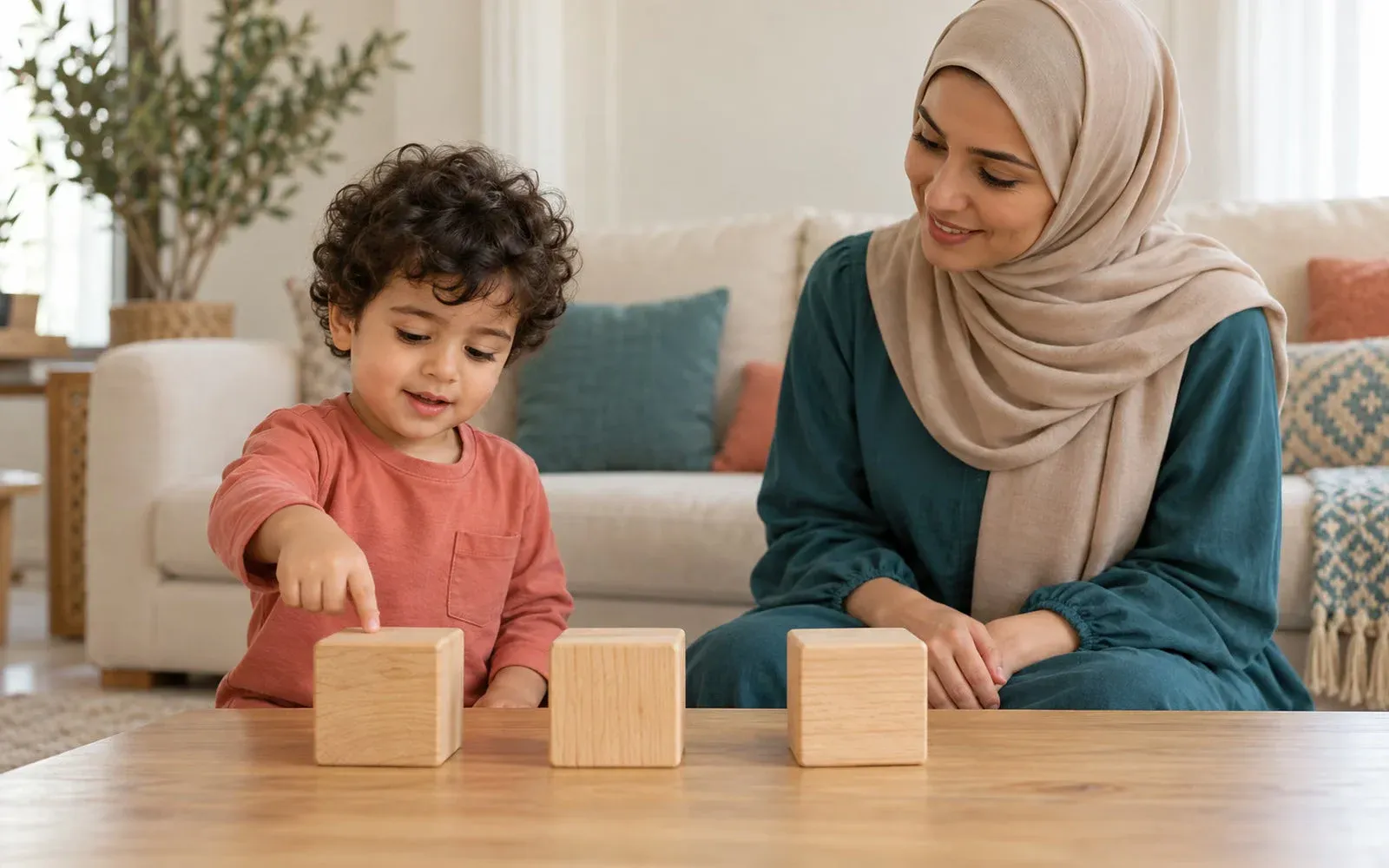
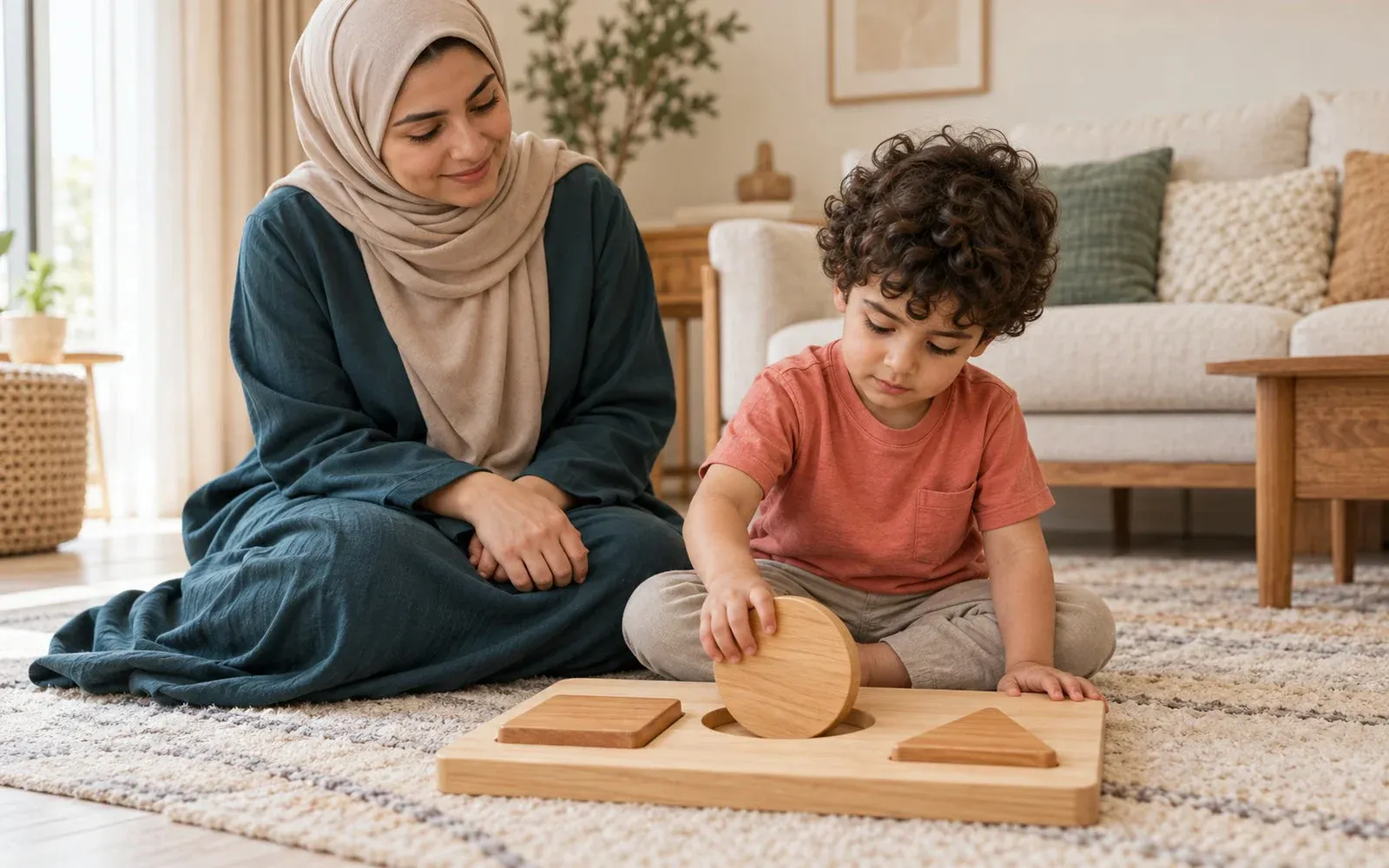
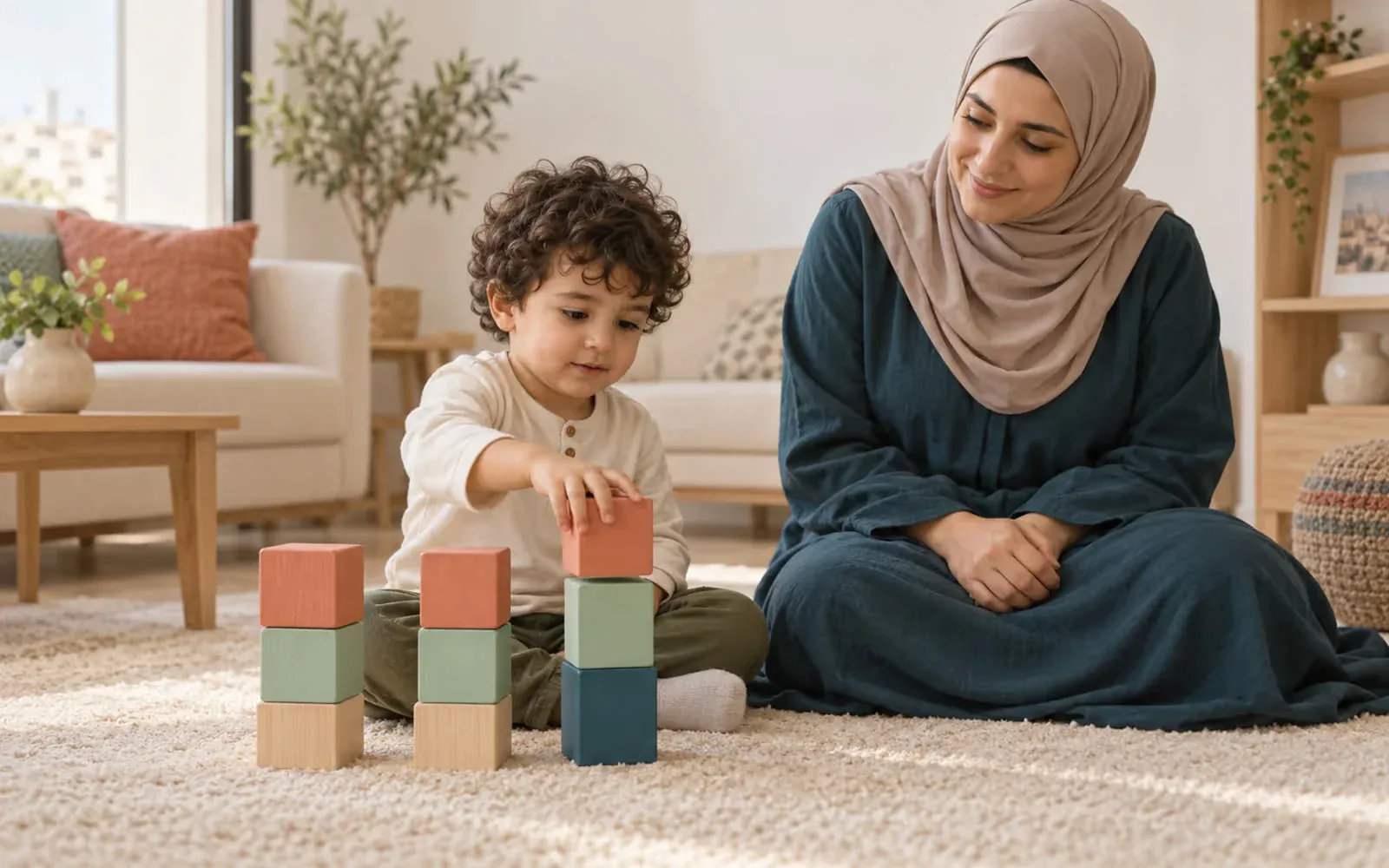
Your child builds a tower of three blocks, knocks it down, then rebuilds it exactly the same way. They put the circle in its slot, take it out, and put it back again and again. Or they ask for the same story until you know every sentence in it. To an adult, the scene may look repetitive, but your child doesn’t necessarily experience it the same way every time.
In one attempt, they control their hand a little better. In another, they change the speed of the movement. And they may be waiting for a sound or a result they’re now able to predict. Sometimes their goal isn’t to reach something new; it’s enough for them to repeat an action that has become understandable and that they can control.
This doesn’t mean every repetition carries a specific developmental benefit, or that we should leave the activity as it is forever. The simpler idea is: Observe before you change. If your child is engaged, experimenting, and can tolerate a small change, repetition can be a foundation for building a new step. But if the activity causes them intense distress, gets in the way of daily life, or comes with other concerns about communication or movement, we look at the whole picture and ask the pediatrician.
In this guide, we’ll look at why children repeat play, then put into practice 8 ways to expand the activity without taking it out of your child’s hands or turning play into a test.
Important note: Repeating a single game or movement does not diagnose a developmental condition, and it isn’t enough on its own to judge a child’s development. If you notice the loss of a skill your child used to use, or you have broader concerns about their play, communication, or movement, talk with your pediatrician and ask for a developmental screening if needed.
What Do We Mean by Repetitive Play?
Repetition doesn’t always mean an exact copy of the previous attempt. A child may repeat the general idea while changing a small detail that an adult doesn’t notice:
-
They insert the same piece, but this time they turn it before inserting it.
-
They build the same tower, but put the biggest block at the bottom after it fell last time.
-
They roll the ball, then change the distance or the force.
-
They feed the doll over and over, but add a new word or sound.
-
They ask for the same story and start anticipating a word or turning the page at the right spot.
A study that observed infants’ interactions with objects in their everyday lives found that these interactions can be longer and more complex than typical short experiments show; a child may stay with one object or move back and forth between objects in a connected sequence. This reminds us not to judge play from a single snapshot. Study of everyday interaction with objects
Why Do Children Love Repeating the Same Game?
1. Because They’re Still Testing the Link Between Action and Result
When a child pushes the ball and it rolls down the ramp, or puts one block on top of another and the tower falls, they’re connecting an action with a result. Trying again lets them change the force, the direction, or the order of the pieces, even if the attempts look alike to us.
We don’t need to call this a “physics lesson,” or claim that every drop builds a specific skill. It’s enough to say that the child is exploring what happens when they handle objects in different ways.
2. Because They’re Practicing a Movement That Isn’t Easy Yet
What an adult does automatically may take a child many attempts: lining up a piece with a slot, balancing a block, twisting a lid, or moving something from one container to another. The result may look the same, while hand precision and the timing of the movement change from one attempt to the next.
Instead of counting repetitions, watch: Has the movement become calmer? Does the piece fall less often? Has your child tried a different hand? These are signs to observe, not a test or a promise that progress has to happen within a set time.
3. Because a Predictable Result Is Comforting and Fun
A child’s life is full of things they don’t decide: when to go out, changing clothes, new sounds, new faces and places. In a familiar activity, they know what will happen, and they can start, stop, and repeat. This sense of being able to predict may be part of the fun of repetition.
So there’s no need to rush to hide the toy just because your child has mastered one step of it. Enjoying mastery may be reason enough to keep playing for a while.
4. Because They’re Learning in a Context That Has Become Familiar
We have direct evidence from story reading: in a study of 3-year-olds, children learned new words better when they heard the same stories repeatedly, compared with hearing different stories containing the same number of target words. A later review explained that a consistent context may reduce some of the demands on attention and allow the child to focus on the new information. The original study, The scientific review
But this is a finding about story reading and word learning, not proof that repeating any game brings the same benefit. We use it to understand the value of familiarity, not to make a sweeping promise.
5. Because They Want a Social Interaction Whose Steps They Know
A child may repeat a game because your response has become part of it: they put the piece in, and you make the same sound; they hide the object, and you ask, “Where did it go?”; they knock the tower down, and you smile and say, “It fell!” The repetition here isn’t only with the object, but with you, too.
The American Academy of Pediatrics points to the value of responsive play between a child and their caregiver, but helpful interaction doesn’t mean we lead every move. We can be present and comment, then leave space for the child to decide what to repeat and what to change. American Academy of Pediatrics report on play
Does Repetition Mean the Toy Is Too Easy?
Not necessarily. A child may repeat the part they can do because they’re still learning it, because they enjoy mastering it, or because they don’t yet know how to move on to another step. To get a better sense, watch the quality of the play, not just the number of times.
What we notice What might it mean? What can we try? Repeats the movement attentively and changes the speed or direction Still exploring Give them time and don’t interrupt the sequence Does it easily, smiles, and repeats it Enjoying mastery and predictability Add a small option while keeping the original activity Asks for your help at the same spot every time The next step may be hard Make one step easier, then hand the turn back to them Throws the pieces or quickly walks away after one try The challenge may not be the right fit, or their interest has run out Reduce the number of pieces or calmly end the activity Refuses any change and gets intensely upset, again and again We need to look at the wider context Don’t force the change; write down your observations and discuss them with the doctor if the concern continuesThese are possibilities to observe, not a diagnosis. Hunger, tiredness, noise, and the way an adult steps in can all change a child’s response to the same activity.
1. Let Your Child Finish the Play Cycle Before Stepping In
When we see the same action for the fifth time, we may jump straight to teaching a color, a number, or a “more correct” way. But your child may be in the middle of an idea they want to test. Wait a few moments and watch:
-
Where do they start?
-
What are they looking at?
-
Do they switch hands or change the force of the movement?
-
What do they do after the result?
-
Do they want you to join in, or do they prefer to keep going alone?
If they’re safe and absorbed, not every repetition needs a comment. A short silence may show you that your child was about to try something new on their own.
2. Describe What’s Happening Instead of Asking Nonstop Questions
Instead of “What color is this?” and “How many blocks?” and “Where’s the circle?”, use a short sentence that describes what your child is doing:
-
“You put the big one on the bottom.”
-
“The ball went down fast.”
-
“You turned the piece.”
-
“You built the tower again.”
-
“The doll ate, and now she wants more.”
Describing adds words to the moment without turning play into a test. Then pause and give your child a chance to respond with a movement, a word, or a look.
3. Look for the Small Change Your Child Started
Before you suggest a new idea, notice whether your child has already changed something. Maybe they placed a block of a different color, took the ball to another surface, or had the animal go to sleep after feeding it.
Follow this change instead of replacing it with your own idea. You might say, “This time you put it here,” and then wait. This way your child feels their play is understood, and they stay in charge of where it goes.
4. Change Just One Thing
If your child seems ready for some variety, don’t change the rule, the materials, and the place all at once. Add one difference they can notice:
-
The same ball, from a little closer or a little farther away.
-
The same blocks, to build a bridge instead of a tower.
-
The same puzzle, after turning the board halfway around.
-
The same sorting activity, with one extra bowl.
-
The same doll, with a cup after the feeding scene has been repeated.
-
The same story, with a pause before a word your child knows.
Your child may take up the idea, or go back to their own way. Going back isn’t failure; you can leave the suggestion available without forcing it.
5. Choose a Challenge That Takes Effort, Not Repeated Rescuing
The right challenge isn’t something your child does instantly, or something they fail at every time. Look for a step they can get close to in a few tries, with a little help when needed.
If a four-piece puzzle is hard, don’t put the pieces in for them. You can remove two pieces and leave only two options, or turn a piece so it’s close to lining up with its slot and then hand it back to your child. And if it has become too easy, change the direction of the board or mix the pieces beside it instead of jumping straight to a busy puzzle.
The idea is to protect the space for trying. Play isn’t a race to the next level.
6. Use the Same Materials for a New Purpose
You don’t need to buy a new toy every time play becomes repetitive. Many large, simple materials allow for more than one use:
-
Blocks: a tower, a bridge, a road, a fence for animals, or seats for a doll.
-
Large cups: stacking, filling, hiding a large object, or serving in pretend play.
-
A soft ball: rolling it between two people, passing it under a bridge, or aiming it at a basket on the floor.
-
Large shapes: matching, lining them up in a row, or using them as pretend food if they’re safe and age-appropriate.
Choose one use and show a quick movement, then step back. If your child doesn’t follow your suggestion, that doesn’t mean they “don’t know how”; they may be interested in a different question within their play.
You can also read our guide to pretend play in children for ideas that expand how familiar objects are used, without needing a new set of toys.
7. Stop the Activity While It’s Still Clear and Easy to Come Back To
If your child gets tired or starts throwing the pieces, we don’t need to drag out the play until they “finish.” Say, “We’re done for now; we’ll come back to it later,” and gather the pieces together if they’re ready.
Put the whole activity in a tray or box instead of mixing its pieces in with lots of other toys. When they come back to it later, they’ll find a clear starting point. And you may notice that they repeat the old idea first, then add something new after they’ve had a rest.
If your child moves between lots of toys and doesn’t settle on any of them, see 8 changes that help children play more calmly and for longer.
8. Set Safety Limits Even When the Repetition Is Fun
Understanding why a child repeats doesn’t mean allowing unsafe use. If your child keeps throwing a hard piece, stands on a toy that isn’t made for climbing, or puts a small part in their mouth, stop the action right away and offer a suitable alternative:
“Blocks are for building, not throwing. Want to throw something? Let’s use the soft ball.”
We don’t need punishment or a lecture. We remove the danger, hold to the rule, and preserve as much as possible the idea your child was exploring: movement, sound, putting in and taking out, or falling.
Read our guide to choosing safe toys for children under 3 before offering a new activity, and check the product’s age range, piece size, material, and actual warnings.
Practical Examples: How Do We Expand a Repetitive Game?
What the child repeats What we notice first A possible small change Builds a two-block tower and knocks it down Are they testing balance or the sound of the fall? Place a third block beside it, or build a short bridge once Puts the same shape into the slot Do they turn the piece, or rely on chance? Offer just two large shapes to choose between Rolls the ball along the same path Are they watching the speed or where it ends up? Change the slope of the ramp a little, or move the basket slightly farther away Feeds the doll over and over Are they repeating a word or waiting for your response? Add one cup, or have the doll say “All done” Asks for the same story Do they fill in the words or point to the pictures? Pause before a familiar word, or ask them to turn the page Empties the container and fills it again Are they comparing size or sound? Add a second container of a different height, with the same large materialsDon’t try every suggestion in one session. Choose just one change, and leave the decision to use it up to your child, as long as play stays safe.
When Should We Leave the Repetition as It Is?
You can let your child keep going when:
-
They seem to be enjoying themselves or focused in their own way.
-
They’re using the materials safely.
-
Small differences show up between attempts, even if the overall result is the same.
-
They can stop for necessary routines with support that suits their age.
-
They return to other activities and interactions during their day.
-
The activity doesn’t cause them distress or disrupt daily life.
There’s no ideal number of times to repeat a game, and no single length of time that suits all children. Wrap up when your child’s interest ends, when it’s time for a necessary routine, or when the use becomes unsafe.
When Is Repetition Worth Asking the Pediatrician About?
Development isn’t measured by a single game, and repetition alone isn’t enough to diagnose any condition. Talk with your pediatrician if you have ongoing concerns, especially when repetition comes with other observations, such as:
-
Losing a word, movement, or social skill your child used to use.
-
Clear difficulty communicating or sharing attention with you.
-
Intense, repeated distress at any small change, to the point that it disrupts the daily routine.
-
Very limited play that doesn’t expand over time, with no other patterns of play or interaction.
-
Repetitive movements or uses that cause injuries or make it hard to keep things safe.
-
Similar observations from family and daycare, or in more than one setting.
-
A feeling that there’s something broader going on than a preference for a familiar game.
The CDC explains that milestone checklists are not a substitute for standardized screening tools, and advises parents to talk with the doctor if skills are lost or if they have any concern. Bring specific examples to the appointment: What does your child do? When? How do they respond when interrupted? And what other ways of playing and communicating do they use? Milestones at 30 months — CDC
How Do We Talk About Repetition at Giggly?
We won’t describe any toy as something that:
-
Prevents repetitive behavior.
-
Treats developmental delay or a developmental disorder.
-
Increases intelligence or focus, guaranteed.
-
Guarantees mastery of a skill through repetition.
-
Automatically moves a child up to “the next level.”
Instead, we use descriptions you can observe:
-
The pieces can be rearranged in more than one way.
-
Lets the child repeat the motion of putting in and taking out.
-
The challenge can be increased by changing the number of visible pieces or the direction of the board.
-
The blocks can be used for building or for making a simple road and bridge.
-
Lets the adult show one movement and then hand the turn back to the child.
And we don’t tie the article to a specific product just to boost sales. You can browse the educational toys at Giggly and choose an activity that suits your child’s age and interests, after reading about the size, material, warnings, and how to use it.
A Simple Four-Session Play Experiment
Session 1: Just Observe
-
Offer one familiar activity.
-
Write down the movement your child repeats.
-
Notice any small change without stepping in.
Session 2: Add a Little Language
-
Use one descriptive sentence.
-
Avoid a string of questions.
-
Wait to see whether your child responds with a movement, a sound, or a word.
Session 3: Change One Thing
-
Add one piece or change the distance slightly.
-
Show the idea once.
-
Accept it if your child goes back to their original way.
Session 4: Use the Materials for a Second Idea
-
Turn the tower into a bridge, or roll the ball under it.
-
Let your child lead what happens after you show them.
-
Compare the quality of play, not the number of minutes or successes.
This isn’t a training plan or a test for your child. Its goal is to help the adult slow down before stepping in and see what the child is actually doing.
The Bottom Line
When a child repeats the same game, we don’t immediately assume they’re bored, and we don’t treat every repetition as a guaranteed developmental achievement. They may be exploring the link between action and result, practicing a movement, enjoying predictability and mastery, or repeating a social interaction they love.
Start by observing. Let them finish the play cycle, describe what’s happening instead of testing them, and look for the small change they started on their own. If you want to expand the activity, change one thing or use the same materials for a new purpose, while keeping your child in the lead role.
Repetition becomes a useful starting point when it comes together with safety, choice, and room to try. And if your concern goes beyond a favorite game to communication, movement, or everyday flexibility, ask your pediatrician instead of trying to diagnose at home.
Frequently Asked Questions
Is it normal for a 2-year-old to repeat the same game?
Many children repeat familiar movements and games as they explore and practice. We don’t judge from repetition alone; we also look at the variety in a child’s play, their communication, how comfortable they are, and their ability to move between different activities and routines.
Should I stop my child when they repeat the same movement?
There’s no need to stop it if it’s safe and your child is engaged. Stop the action if it becomes dangerous, or end the activity if your child is tired or it’s time for a necessary routine, using a short sentence and a clear transition.
Does repetition mean the toy is too easy?
Not always. Your child may be practicing a detail that isn’t easy for them yet, or enjoying mastering the result. Watch whether they change something small, then add just one challenge if they seem ready.
How do I add a challenge without frustrating my child?
Change one thing: an extra piece, a slightly longer distance, a different direction for the board, or a second use for the same materials. Show the idea once, then leave it up to them whether to try it.
Why does my child ask for the same story every day?
Familiarity makes the story’s sequence predictable, and your child may start remembering the pictures and words. Studies of 3-year-olds have shown that repeating the same story can support word learning more than spreading the words across different stories, but that finding doesn’t mean all children learn in the same way or at the same pace.
Should I buy a new toy when my child keeps repeating the same game?
Usually not. The same blocks can build a tower, a road, or a bridge; the same ball can be rolled or aimed at a basket; and cups can be used for stacking or pretend play. What’s new can be the idea, not the purchase.
Is repetitive play a sign of autism?
Autism, or any other condition, can’t be diagnosed from repeating a single game. If repetition comes with broader concerns about communication, interaction, and flexibility, or if your child loses a skill, talk with your pediatrician and ask for a developmental screening.
What should I do if my child gets angry when I change the game?
Return the activity to its familiar form, reduce the amount of change, and give your child a heads-up before play ends. If the distress is intense, keeps happening, and disrupts the daily routine, write down examples and discuss them with your pediatrician.
Trusted Sources Used in Preparing This Article
-
Infants’ interactions with objects in everyday life — Developmental Science / PMC
-
Contextual repetition and word learning — Frontiers in Psychology
-
The original study: story repetition and word learning in 3-year-olds — University of Sussex
-
The power of play and the pediatrician’s role — American Academy of Pediatrics
-
Milestones at 30 months and when to talk with the doctor — CDC