
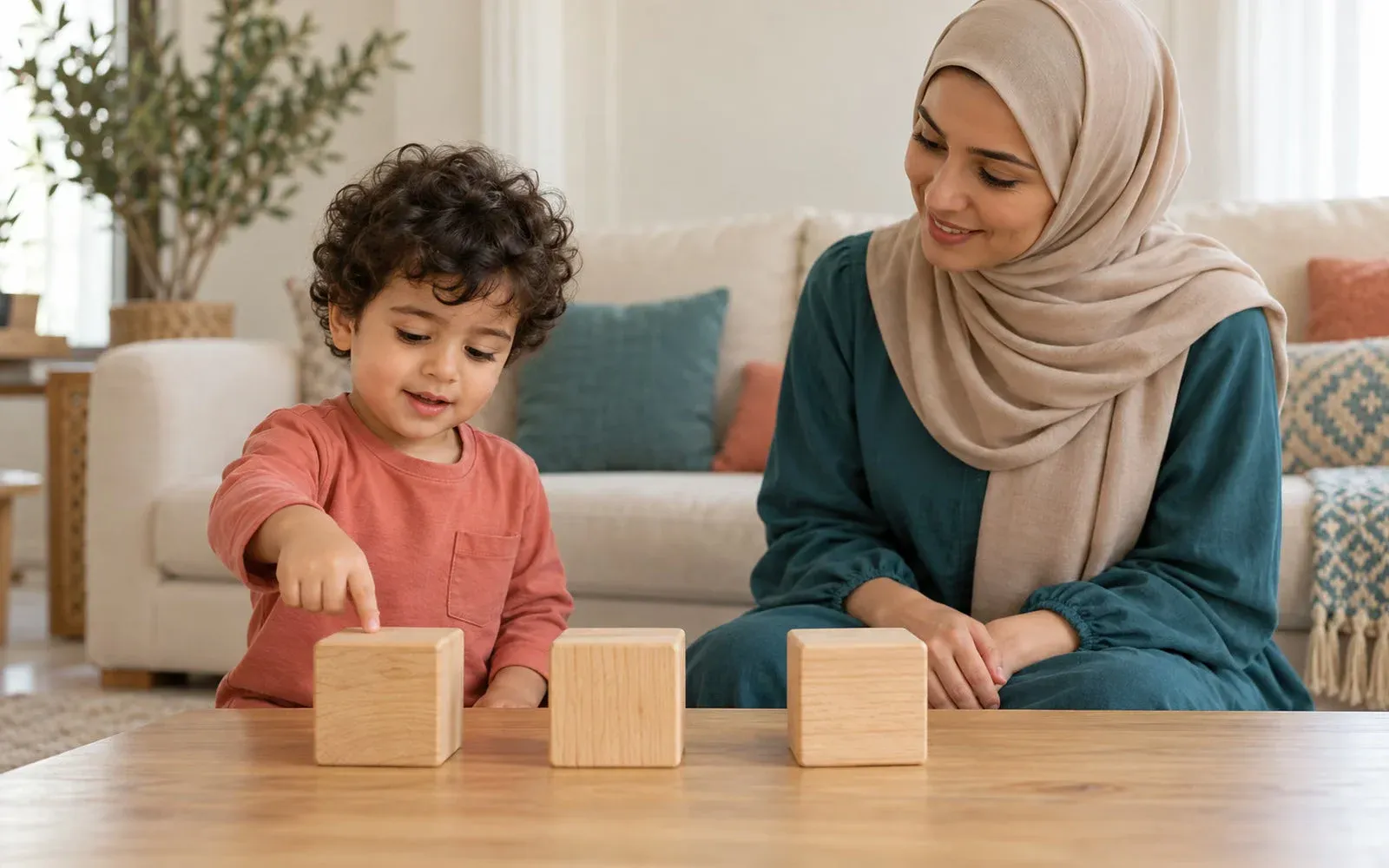
What's the difference between memorizing numbers and understanding quantity? 8 practical ways to count, match and compare objects during play, with an original study and its limits, and no tests or exaggerated promises.
…
Practical ideas for play and learning at home.
What's the difference between memorizing numbers and understanding quantity? 8 practical ways to count, match and compare objects during play, with an original study and its limits, and no tests or exaggerated promises.

A practical guide to playing and exploring near nature: 8 simple ideas, minimal gear and safety guidance, with a scientific review that explains the findings and their limits without exaggerated promises.
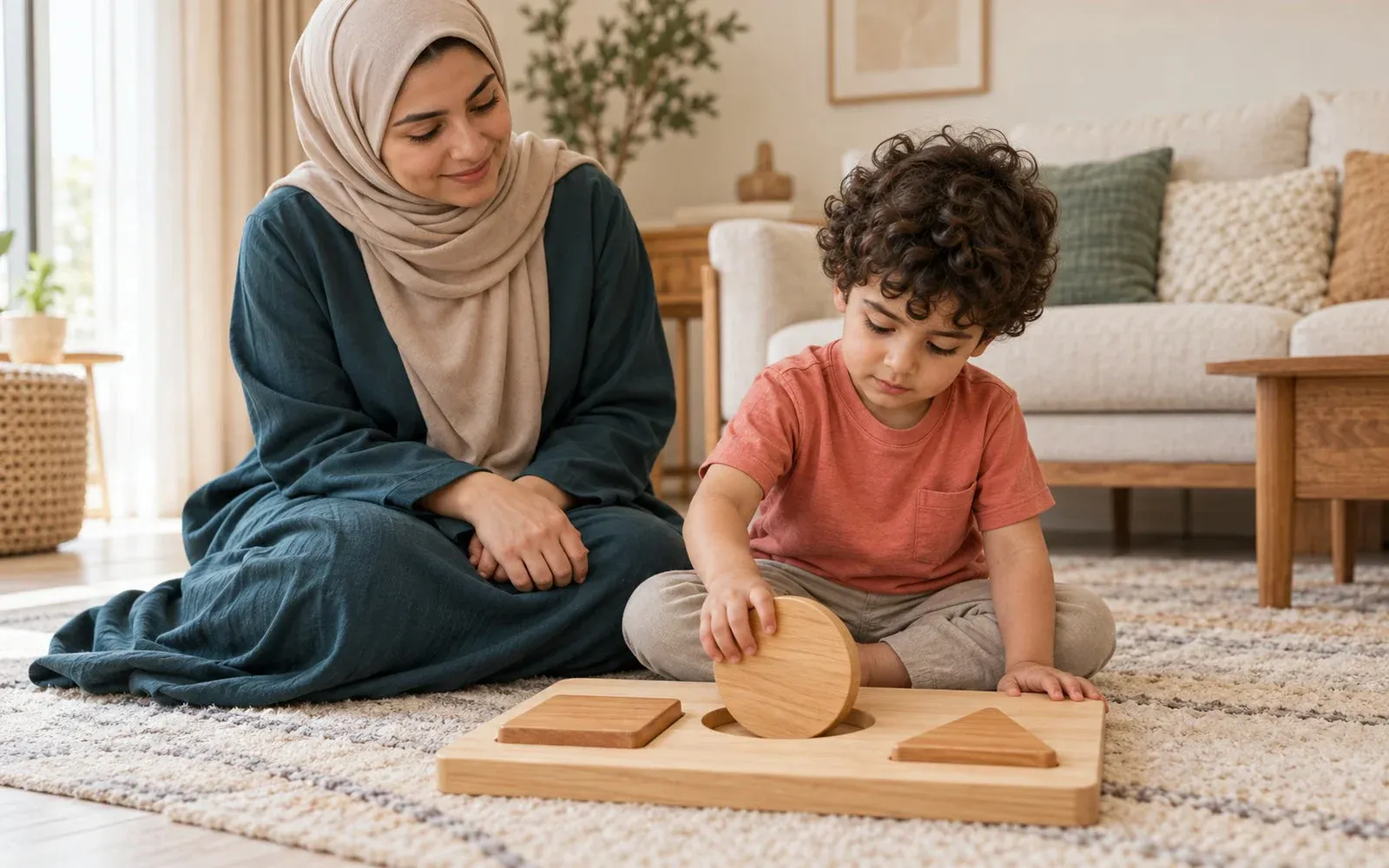
How do we support a child when play gets hard? 8 steps for specific encouragement, simple help and respecting breaks, with an original study, the limits of its findings, and practical examples for home.

A practical guide to dialogic reading with your child: How do we follow their interest, wait for their response, and build on their words? With research findings and their limits, plus at-home examples without pressure or exaggerated promises.
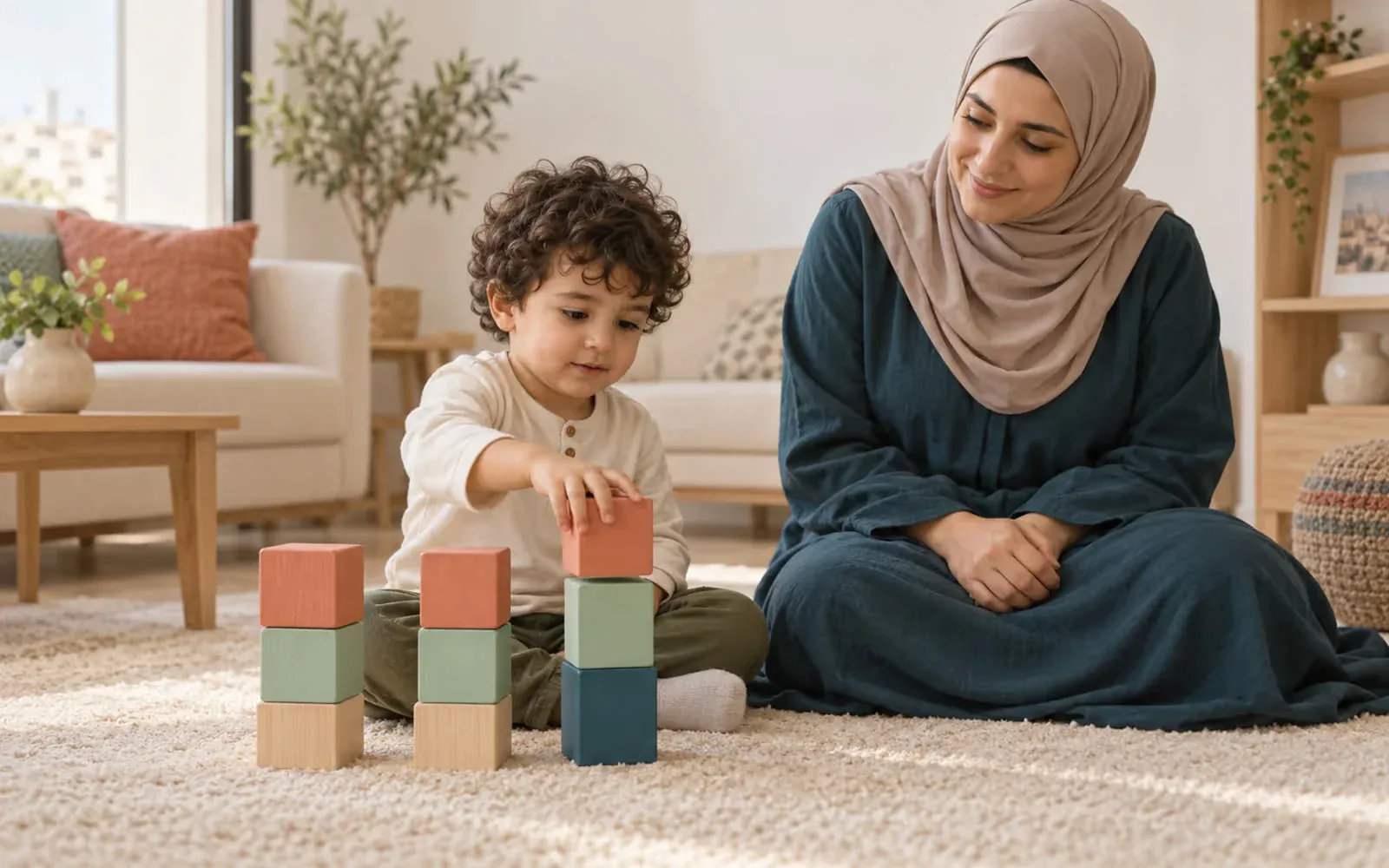
Does your child fit the same piece or build the tower the same way again and again? Learn why children repeat play, how to notice small progress, and how to add one suitable challenge without interrupting your child’s interest.

Does your child throw a toy and then wait for you to bring it back? They may be exploring how things fall, asking for interaction, or expressing frustration. Learn 4 common reasons and 8 practical steps to stop unsafe throwing and teach a clear alternative.
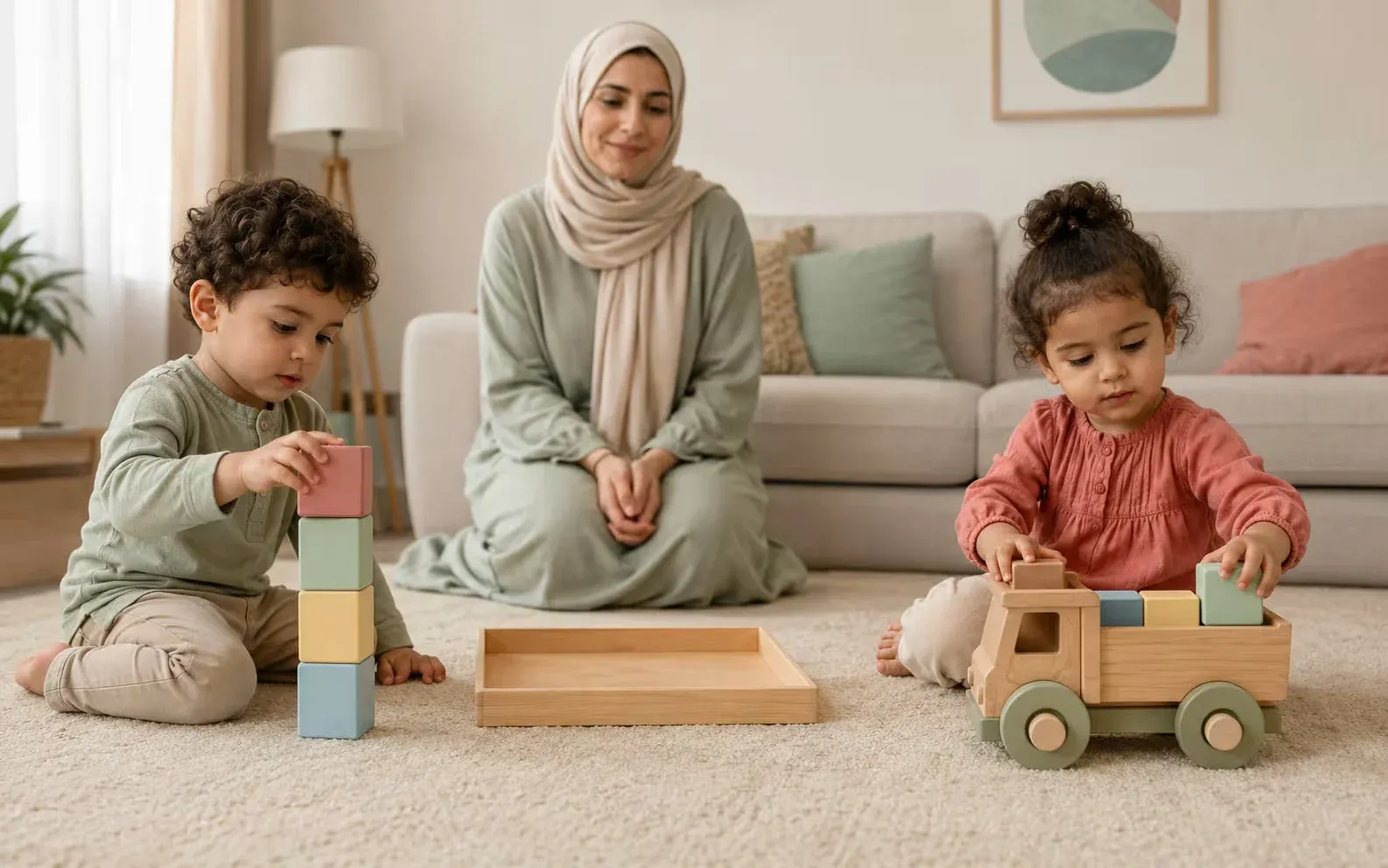
Does your child refuse to give up a toy or grab another child’s? That doesn’t mean they’re selfish. Learn about parallel play and the difference between sharing and taking turns, and try 8 practical steps for calmly handling grabbing and waiting.
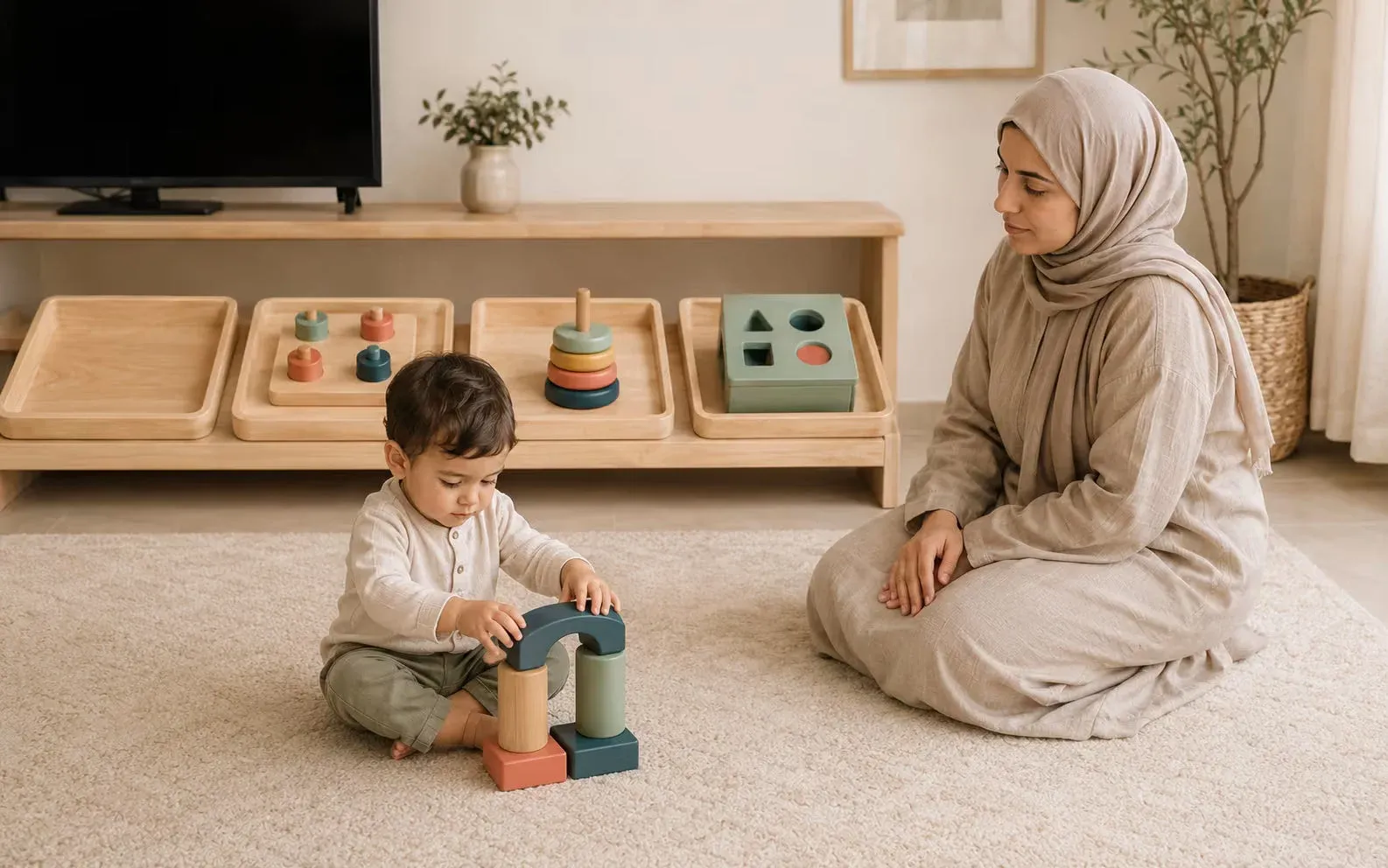
Does your child drop a toy after a few minutes and move on to another? Not every switch is a sign of distraction. Learn how too many choices, noise, and an activity’s difficulty affect play, and try 8 practical changes that support calmer play without pressure or buying more toys.
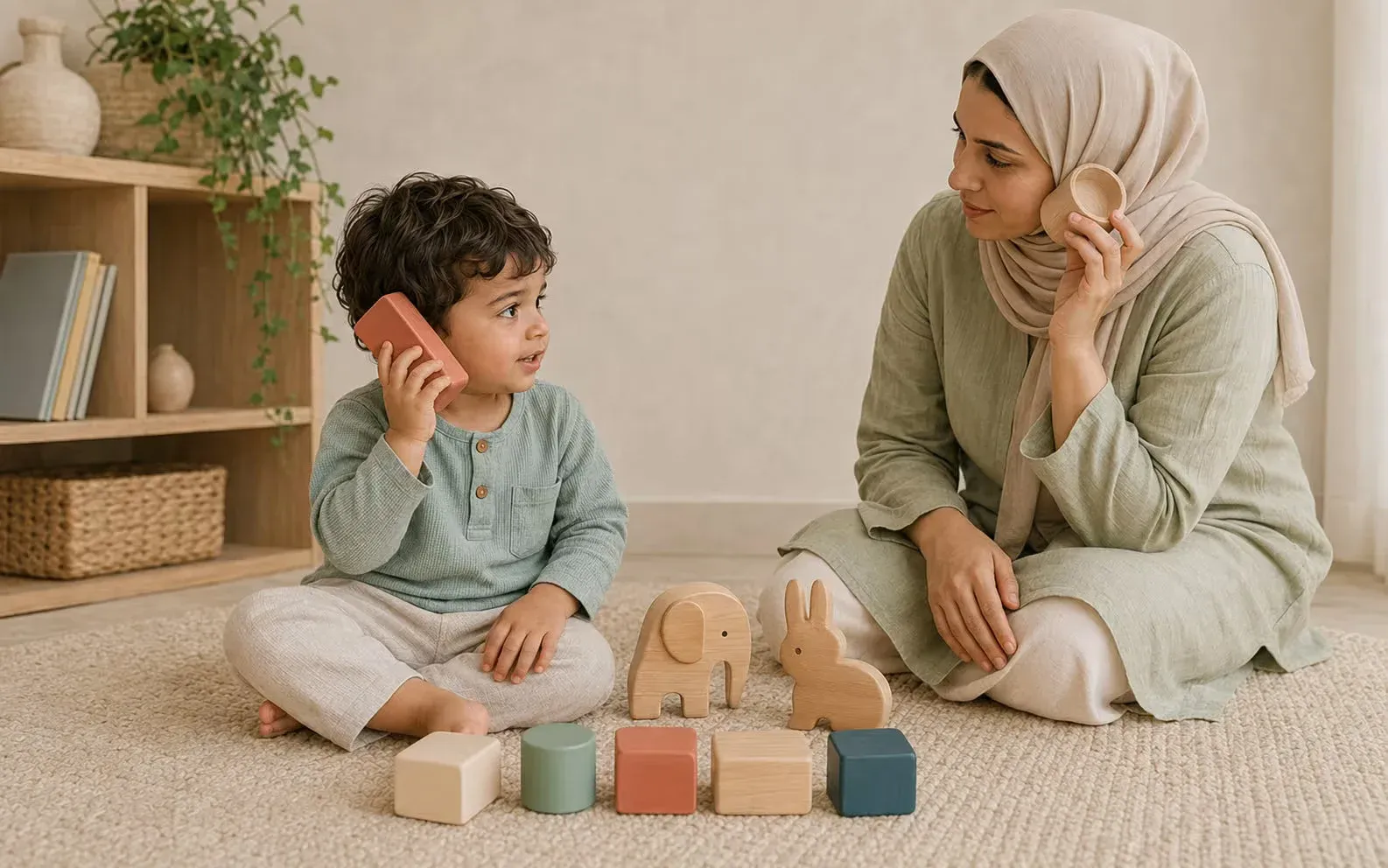
When does an empty cup turn into an imaginary drink, and a block into a phone or food for a doll? Learn what pretend play means and its approximate stages, and try 9 simple ways to support it with things you already have at home.
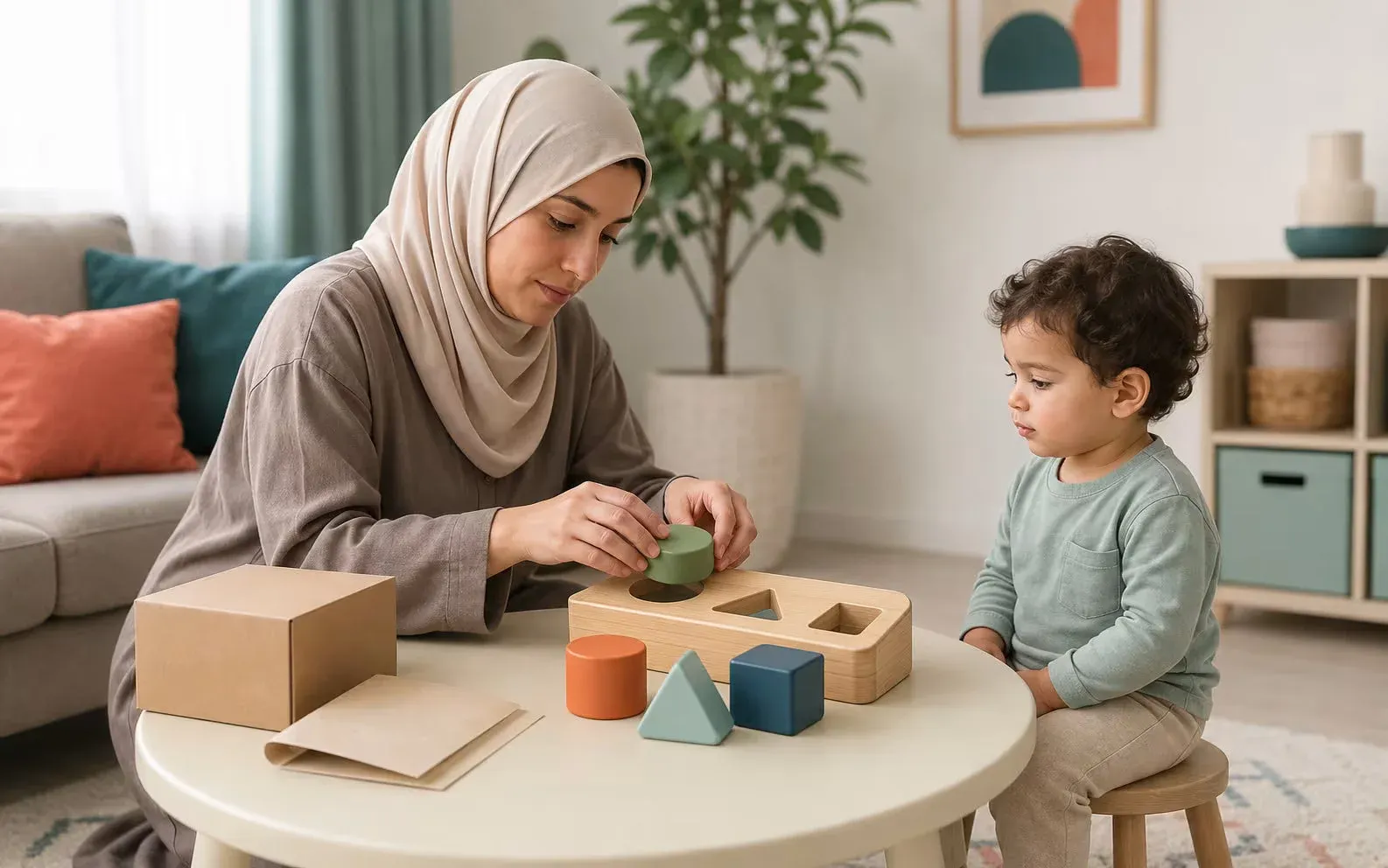
It isn’t enough for a toy to look sturdy or to say “suitable for children” on it. Learn what to check about age, pieces, batteries, magnets and materials before you buy, then run a practical test when the toy arrives and before every use.
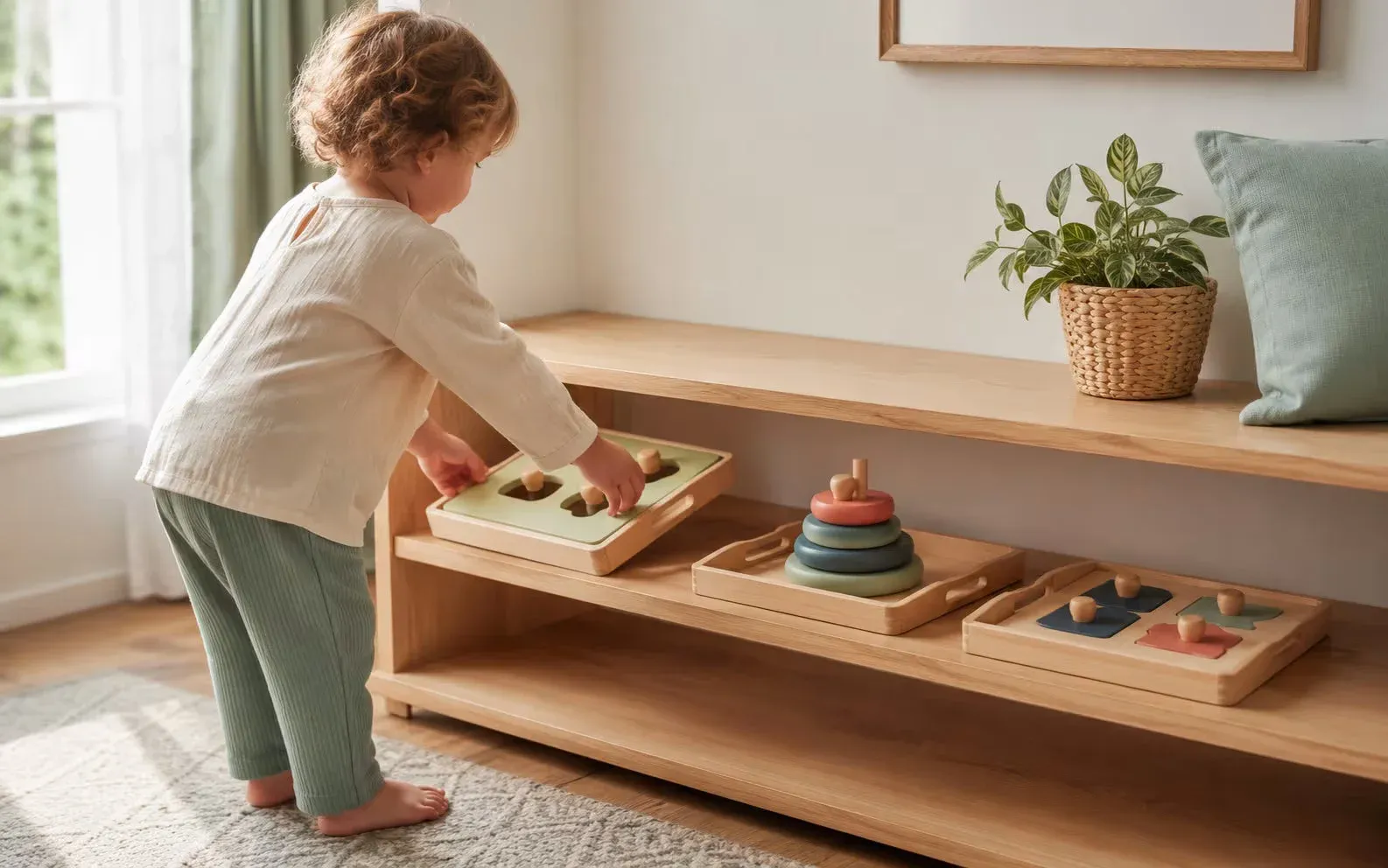
Not every wooden toy is a Montessori toy, and the word “Montessori” on the box isn’t proof enough. Learn the principles that set Montessori-inspired toys and activities apart, and how to safely choose what suits your child’s age.
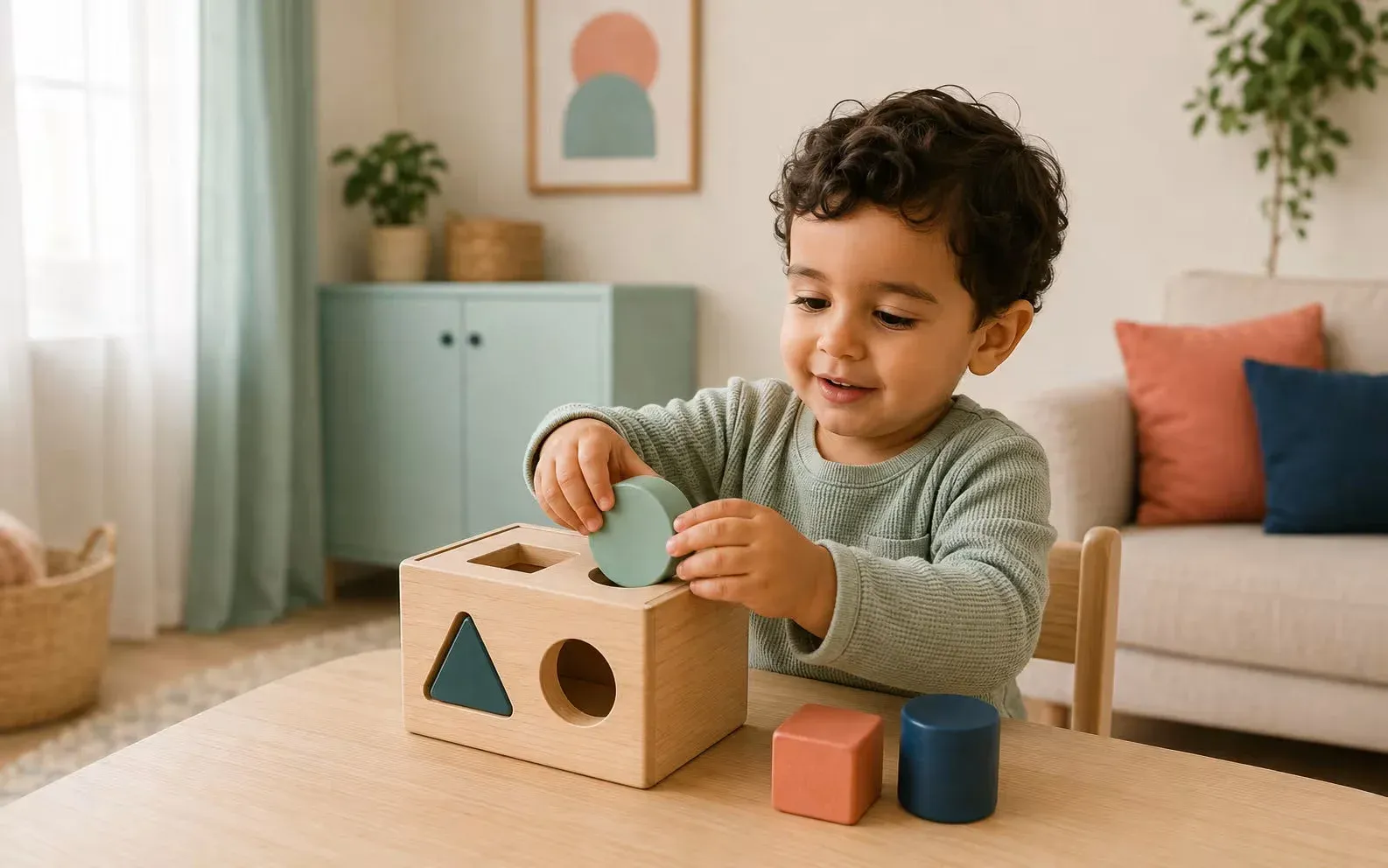
Which toys give a child a real chance to use their hands and fingers? Discover sorting, fitting, stacking, puzzle and lacing toys suitable for ages 2 to 3, and how to choose a safe level of challenge for each child.
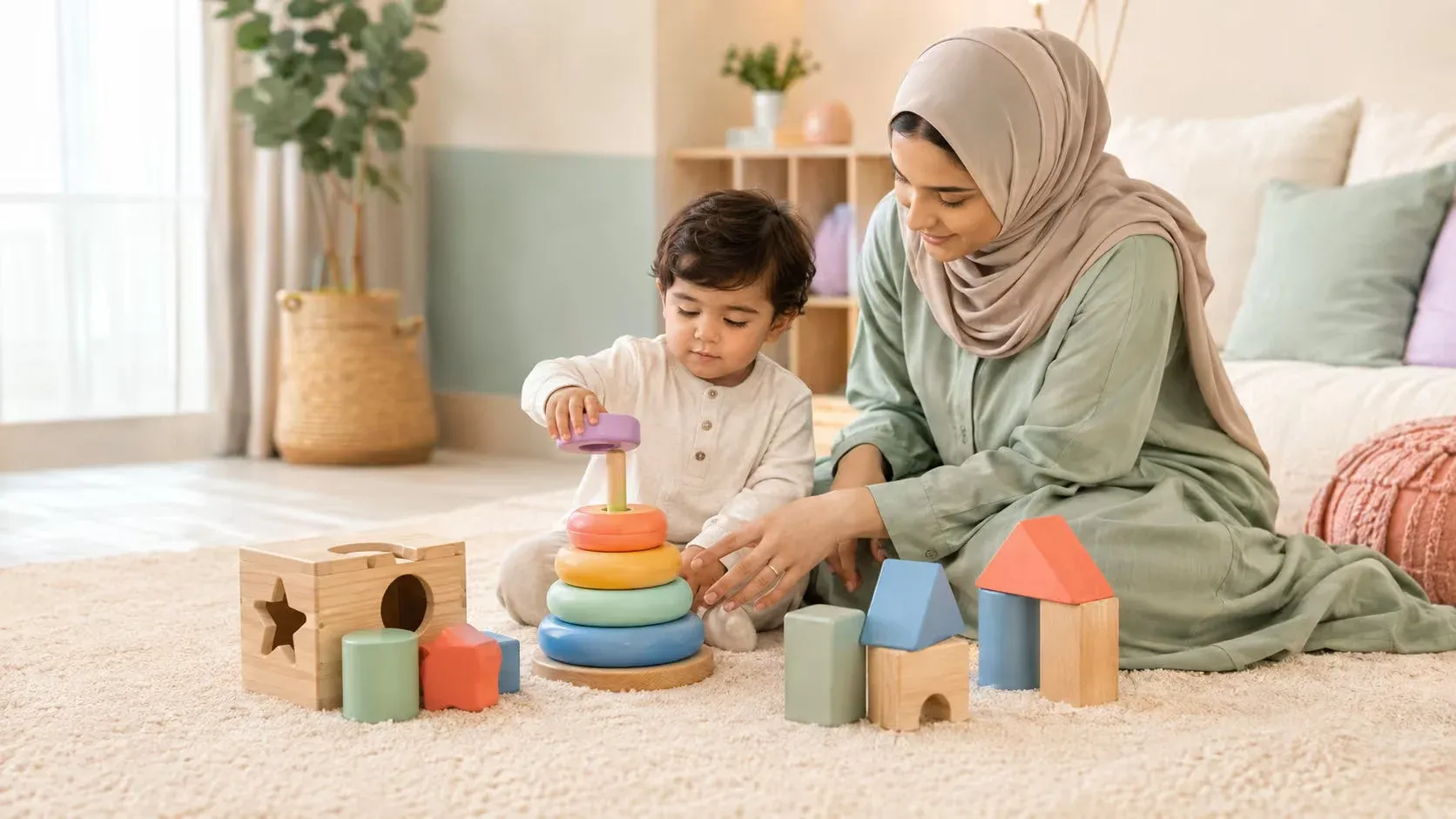
Choosing an educational toy isn’t just about how it looks or how many functions it has. In this guide, discover the right toys for each stage from 6 months to 3 years, and how to balance benefit, challenge and safety.