Why Does My Child Throw Their Toys? 8 Steps to Handle Throwing Without Yelling or Punishment
Does your child throw a toy and then wait for you to bring it back? They may be exploring how things fall, asking for interaction, or expressing frustration. Learn 4 common reasons and 8 practical steps to stop unsafe throwing and teach a clear alternative.

Why Does My Child Throw Their Toys? 8 Steps to Handle Throwing Without Yelling or Punishment
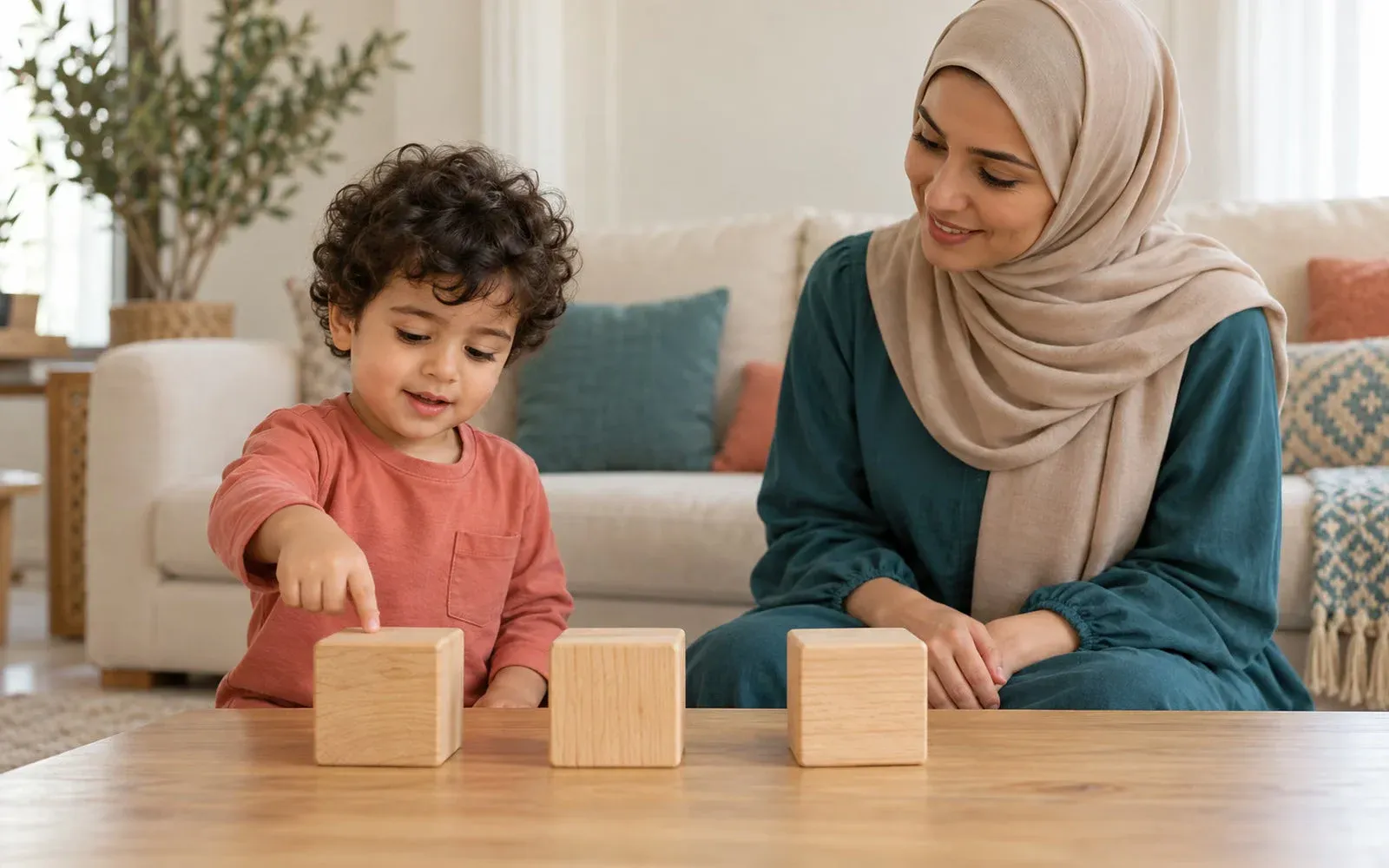
You put the block back in your child’s hand, and they look at you and throw it again. You pick it up, and they smile and throw it a third time. A few minutes later, they may throw another toy hard because they couldn’t fit a piece, and the two actions look alike: the toy is on the floor. But the reason isn’t necessarily the same.
A young child may throw to see how things fall or what sound they’ll make. They may be finished with the activity and not know how to say “All done.” And sometimes the throwing keeps happening because the adult bringing the toy back has become a fun social game. When they’re tired or angry, a child may use their hands before they can find the words or stop their impulse.
Understanding the reason doesn’t mean allowing hard blocks to be thrown, or things to be thrown at people. Our job is twofold: We stop what could hurt, and we teach the child what they can do instead. In this guide, we’ll tell the different types of throwing apart, then put into practice 8 short, consistent steps, without yelling or calling your child naughty.
Important note: Throwing is a behavior, not a diagnosis. A child’s development or emotional state can’t be judged from a single incident. If you have broader concerns about their communication, movement, or behavior, or you notice the loss of a skill they used to use, talk with your pediatrician and ask for a developmental screening if needed.
First: Throwing Isn’t Just One Behavior
Before we say “Don’t throw,” watch the seconds before the throw and what happened after it. The context often tells us more than the object lying on the floor.
1. Throwing to Explore
Between 12 and 24 months, many children use their bodies to test simple ideas: What happens when the ball falls? Does this thing bounce? Do wood and wool make the same sound? ZERO TO THREE describes children at this stage as running “experiments” by pushing, pulling, filling, dumping, throwing, and gathering.
With this type, we often see:
-
A curious or calm face, not obvious anger.
-
The movement repeated the same way.
-
Watching the object’s path or listening to its sound.
-
Trying more than one object to compare the results.
-
Wanting the adult to bring the object back so they can repeat the experiment.
This is understandable exploration, but we still choose safe materials and a safe place for it.
2. Throwing to End the Activity
A child may push the plate or the toy away because they’re done, especially if they don’t have a clear word or sign for it. Here, their goal isn’t to study falling; they want to get the thing away from them in the quickest way they know.
Watch whether the throwing happens at the end of a meal or after their interest in the toy fades. If so, we teach them a practical alternative: handing the object to us, putting it in an “all done” box, or signing with their hand and saying “All done.”
3. Throwing to Ask for Interaction
If you bring the toy back quickly every time, the movement may turn into a back-and-forth game: the child throws, the adult bends down and picks it up, and then the two of you exchange looks or laughter. This doesn’t mean your child is “manipulating” you; they’ve noticed a sequence they can set in motion.
We can respond to the communication without picking up the object forever. We bring it back once or twice, name what happened, then turn the game into a safe, clearly defined version, such as rolling a large ball on the floor.
4. Throwing When Angry or Frustrated
A 2-year-old may throw a toy when a piece won’t fit, when they’re asked to stop, or when another child takes their turn. ZERO TO THREE explains that children at this stage may use actions such as hitting, kicking, or throwing toys when they’re overwhelmed by strong feelings and their words or their ability to control their movements aren’t enough.
Here, a child doesn’t need a long lesson in the middle of the outburst. They need an adult who stops the harm, sets a short limit, helps them calm down, and then teaches the alternative once they’re able to listen.
How Do We Know What Kind of Throwing Is Happening?
What we notice Possible reason First response Throws, watches the fall or listens to the sound, and calmly repeats Exploring cause and effect Move the experiment to a soft ball and a safe place Pushes the toy away after moving away from it or losing interest Finished with the activity Teach them “All done” or putting the toy in a box Throws, looks at your face, and waits for you to pick it up Asking for interaction or repeating a social game Bring it back once, then start a clear rolling game Throws after failing at something, being stopped, or a conflict Frustration or anger Stop the throwing, name the feeling, and help them calm down Throws at many different times of the day There may be several triggers Note when, where, and what came before the throwing instead of assuming a single causeThese aren’t diagnostic tests. Two reasons can come together in one situation; a child may start out exploring, then keep going because the grown-ups’ laughter made it a fun interaction.
Is Throwing Normal at Age One or Two?
Dropping things and letting go of them is part of what children discover as their control of their fingers and arms improves. The American Academy of Pediatrics notes that a child may enjoy dropping things and calling an adult to bring them back, and suggests steering them toward softer objects instead of letting them throw hard pieces.
In its guidance for 2-year-olds, the CDC suggests providing balls for the child to kick, roll, and throw. This doesn’t mean there’s one age at which throwing starts or stops, or that throwing any object is appropriate. The important difference is between throwing as a skill, which can be practiced with the right object in the right place, and throwing something hard or at a person, which crosses a safety limit and must be stopped.
Approximate stage What we might see What we provide A baby who can sit up and grasp Opens their hand, drops the object, and watches it Large, age-appropriate objects and close supervision; nothing small or heavy 12–24 months Drops and throws again and again, comparing sounds and movement A large soft ball, a basket on the floor, and safe filling-and-dumping experiments 2–3 years Aims throws better, and throwing may show up during frustration Clear rules about where, purposeful throwing games, and alternative words for anger and being doneThese ages are approximate and are not a standard for judging a child. Always follow the age range and warnings set by the object’s manufacturer, and check its size, weight, and condition before play.
1. Stop the Danger First, with as Few Words as Possible
If your child picks up a hard wooden piece, or throws toward a person or a window, move in right away. Gently stop their hand if needed, move the object away, and say in a steady voice:
“I won’t let you throw the block. It could hurt someone.”
Don’t explain physics or ask for an apology in that moment. Safety comes before teaching. And if someone gets hurt, take care of them first, then come back to your child once things have calmed down.
Avoid yelling from across the room; it may not stop the movement in time, and it can turn the situation into an even bigger outburst. Moving closer, removing the dangerous object, and saying one clear sentence are more useful.
2. Use a Short Rule That Describes What We Do
Saying “Don’t throw” tells a child what to stop doing, but it doesn’t always give them an alternative. Link each object to its purpose:
-
“Blocks are for building.”
-
“The car drives on the floor.”
-
“The ball is for throwing.”
-
“Toys go in the box when we’re done.”
-
“We throw toward the basket, not toward people.”
Use the same words every time. A young child learns more from a repeated pattern than from explanations that change with the adult’s mood.
3. Offer a Safe Alternative That Meets the Urge to Throw
If your child wants to use the throwing motion, stopping every throw without offering an alternative may leave the urge itself in place. After moving the hard object away, say:
“We don’t throw blocks. Want to throw something? Here’s the ball.”
Choose a large, soft ball suitable for your child’s age, and set up a low target, such as an empty laundry basket on the floor. Move people and breakable things out of the way, and don’t use a ball with parts that could come off, or a heavy object just because it’s soft on the outside.
You can start with rolling if you’re indoors or if your child can’t aim a throw yet. The goal isn’t for them to hit the basket accurately, but to understand that throwing has its own tool and its own place.
4. Don’t Turn Picking Up the Toy into Endless Service
When your child throws a toy from the high chair or behind the couch and waits for it to come back, you can return the object once and name what happened:
“The ball fell. I brought it back.”
If they do it again, make the consequence clear:
“You threw it again, so we’re done with it for now.”
Then put the object out of reach, without anger. We don’t need to pick it up twenty times, or accuse the child of trying to provoke us. If they’re looking for interaction, offer a connection game you can keep up: rolling the ball back and forth between you, or putting large pieces into a container and then emptying it together.
In the high chair, don’t tie a string to a toy or utensil and around your child; strings can pose an entanglement or strangulation hazard. It’s better to offer just a few objects, and to put them away once they start getting thrown over and over.
5. Teach “All Done” and “Help Me” Outside Moments of Anger
Throwing is sometimes faster than talking. We need to make the alternative easier and familiar:
-
Hold out your hand and say: “If you’re done, give it to me.”
-
Set out a small box for finished toys and say: “All done? Put it here.”
-
When a toy gets stuck, say “Help me” along with a hand sign.
-
When they want to repeat an action, teach them “More” instead of throwing the object at you.
-
If their speech is still limited, accept a gesture or handing over the object; don’t require them to say the whole word.
Practice at a calm time. Give your child a toy, then act out being done and put it in the box. After that, invite them to try it. Don’t wait for a meltdown to introduce a new word for the first time.
6. Watch for Triggers and Adjust the Environment
Before trying to “correct the child,” ask what makes throwing more likely:
-
Are there a lot of pieces on the table?
-
Is the activity harder than what they can currently do?
-
Has play gone on after they lost interest?
-
Does the throwing happen more when they’re hungry or tired?
-
Is there a screen or noise adding to overstimulation?
-
Does it start when another child comes near their toy?
-
Do the grown-ups laugh or rush to bring the object back every time?
Reduce the number of items in view, offer one clear activity, and choose a time when your child is as comfortable as possible. If a clutter of toys leads your child to fling things around without playing with them, see steps for setting up a calmer play space.
Adjusting the environment doesn’t mean your child will never throw, but it removes some of the situations we already know tend to end in chaos.
7. Make the Consequence Logical and Consistent
If your child throws a soft ball toward the basket, the activity continues. If they throw a hard block after a reminder, the block takes a short break from play. The connection is clear: An object that isn’t being used safely doesn’t stay available right now.
Say:
“You threw the block again. I’m going to put it on the shelf, and we’ll try it another time.”
Don’t make the consequence long or humiliating, don’t take away toys that have nothing to do with the situation, and don’t threaten something you won’t follow through on. Consistency matters more than how harsh the punishment is. ZERO TO THREE recommends consistent limits, along with offering an acceptable alternative when we stop unacceptable behavior.
And when you bring the toy back later, remind your child before they start: “Blocks are for building. If you want to throw, the ball is right here.” That way they get a fresh chance, instead of the incident becoming a permanent label.
8. Notice the Behavior You Want and Practice It
Don’t let all of your attention come after throwing. When your child uses an object safely, describe what they did:
-
“You put the block on top of the other block.”
-
“You gave me the toy when you were done.”
-
“You asked for help instead of throwing it.”
-
“You threw the ball inside the play space.”
-
“You were upset, and you put the toy down on the floor.”
Specific praise or a calm description is clearer than “Good job!” on its own. The American Academy of Pediatrics recommends giving more attention to the behavior you want and noticing successful attempts.
You can set aside five minutes a day for a safe throwing game: one ball, one basket, and a short distance. Say “Ready… throw!” and then gather up the ball together. A clearly defined activity gives your child a chance to use the skill in an acceptable place, and it also gives them practice waiting, gathering, and finishing.
What Do We Say in the Moment?
Situation Short phrase What we do Picked up a block to throw “I won’t let you throw the block.” Stop their hand and move the block away Wants to throw for fun “The ball is for throwing. Toward the basket.” Offer a soft ball and a clear space Threw because they were done “All done? Give it to me or put it here.” Hold out a hand or offer a box Threw after failing at something “You’re upset because it didn’t fit. ‘Help me.’” Set a limit, then help once they’ve calmed down Throws so we’ll bring it back “I brought it back once. If you throw it, it takes a break.” Calmly follow through with the consequence Threw toward another child “I won’t let anyone get hurt.” Protect the other child and move the object away immediatelyMemorize just two or three sentences. Too much talking during an outburst can make it harder for a child to understand what’s expected.
Activities That Allow Safe Throwing at Home
A Soft Ball into a Basket on the Floor
Put an empty laundry basket on the floor and start from a short distance. Use a large, soft ball suitable for your child’s age, not a small ball or an object filled with beads that could leak out.
Rolling the Ball Between Two People
If aiming a throw is hard or the space is tight, sit facing each other and roll the ball. This slows things down and makes the back-and-forth game clear.
Dropping the Ball into a Tube or an Open Box
Your child drops the ball from a low height into a wide box or a toy tube designed for this purpose. It’s an organized falling experiment without flinging things around the room. The object should be stable and have a large opening, and it shouldn’t allow your child’s head or hand to get stuck.
Gathering the Balls After Throwing
Make gathering part of the game: “We threw three balls; now let’s gather them up.” We don’t use tidying up as a punishment, but as an expected ending to the activity.
Play safety: Don’t use small balls or parts that could fit entirely in your child’s mouth, and don’t use balloons, bags, or heavy objects for throwing. Check the recommended age, warnings, and the object’s condition, and supervise your child around baskets and boxes. You can review our guide to choosing a safe toy for a child under 3.
What Do We Do If They Throw When Angry?
When your child is angry, follow a short sequence:
-
Stop the harm: Move the hard object away and protect the people nearby.
-
Name the feeling without excusing the throwing: “You’re upset because the piece didn’t fit.”
-
Set the limit: “It’s okay to be upset; throwing the block is not.”
-
Offer an alternative action: “Say ‘help me,’” or “Put it on the table,” or “Throw the soft ball toward the basket,” if that’s appropriate.
-
Help them calm down: Cut back on talking and noise, and stay close in a way they’re comfortable with.
-
Teach once they’re calm: Act out the alternative sentence or action again, in just a few seconds.
If the throwing is tied to a fight over a toy, stop the grabbing or the harm and set up turns, instead of forcing the two children to resolve the situation while they’re angry. You can review steps for teaching turn-taking without forcing it.
Common Mistakes That Keep the Throwing Going
Yelling from Across the Room
It may scare your child or add to the outburst, but it doesn’t teach them what to do with the object in their hand. Move closer, stop the danger, and use a short sentence.
Laughing, Then Getting Angry at the Same Behavior
If we laugh when they throw today and punish them tomorrow, the rule becomes confusing. Decide what can be thrown and where, and apply the same limit as consistently as you can.
Bringing the Toy Back Endlessly
This can turn throwing into the most reliable way to get interaction. Bring it back once, then change the activity or put the object away.
Banning All Throwing
Throwing is a motor skill that can be practiced safely. A blanket ban doesn’t teach the difference between a ball and a block, or between a basket and someone’s face.
Giving a Lecture During an Outburst
An angry child doesn’t benefit from five sentences about respect and responsibility. The limit comes first, calming down second, and brief teaching after that.
Using Labels Like “Naughty” or “Aggressive”
A label doesn’t explain the reason or offer an alternative. Describe the action, “You threw the block at your brother,” then apply the safety limit.
Threatening a Punishment Unrelated to the Situation
Canceling tomorrow’s visit or taking away all the toys doesn’t make the rule about how to use things any clearer. The logical consequence is putting away the object that was thrown unsafely, right now.
Offering Something Small or Heavy as an Alternative
Not everything soft is safe, and not every ball suits every age. Check the size, weight, material, and warnings before an object becomes part of a throwing activity.
When Is Throwing Worth Asking the Pediatrician About?
Throwing alone, especially during exploration or a passing moment of anger, isn’t enough to conclude that there’s a problem. But talk with your pediatrician if:
-
Throwing or physical behavior causes repeated injuries to your child or others.
-
Outbursts are intense or frequent for weeks, and the family can’t keep everyone safe.
-
Your child attacks adults, or fear keeps the family from everyday activities.
-
The behavior shows up in more than one place and worries the family and daycare or other caregivers.
-
You have broader concerns about communication, movement, or interaction, not just about throwing.
-
Your child has lost a skill they used to use.
The American Academy of Pediatrics recommends seeing the doctor when there’s unusual, persistent aggression, injuries, or fears for safety. The CDC also advises not waiting when a skill is lost or there’s a developmental concern. Don’t use this list to diagnose your child; bring clear notes to the appointment about timing, triggers, and what happens after the behavior.
How Do We Talk About Throwing at Giggly?
We won’t describe any toy as something that:
-
Stops a child from throwing things.
-
Treats aggressive behavior or tantrums.
-
Teaches self-control automatically.
-
Releases negative energy or treats hyperactivity.
-
Develops coordination or focus, guaranteed.
Instead, we use descriptions you can observe:
-
A large, soft ball that can be rolled or thrown in a clear space under supervision.
-
An activity that lets a child drop a large piece into an opening designed for it.
-
Can be used in a back-and-forth game with parents.
-
The pieces can be gathered up and put in the container when the activity is over.
-
Contains hard pieces meant for building or matching, not for throwing.
We won’t include a link to a specific product in this article unless we’ve verified that its age range, size, material, and intended use are truly suitable for a throwing activity. You can browse the educational toys at Giggly and read each product’s guidelines before choosing.
A Quick Plan for the Next Three Days
Day 1: Observe Before You Change Anything
-
Write down just three throwing incidents.
-
What happened before each one?
-
What did your child throw?
-
Where did they throw it?
-
What did the adult do afterward?
Day 2: Set the Rule and the Alternative
-
Choose one sentence: “Blocks are for building, and the ball is for throwing.”
-
Get one soft ball and a basket on the floor ready.
-
Practice safe throwing for five minutes at a calm time.
-
Put an “all done” box near the play area.
Day 3: Apply the Same Consequence
-
Stop the throwing of hard objects right away.
-
Offer the ball if your child wants to throw.
-
If they keep throwing a toy, calmly put it on the shelf.
-
Notice any time they hand over an object or ask for help.
We don’t expect the behavior to disappear within three days. The goal is for the adult’s response to become clear and consistent, and for your child to start seeing an alternative they can use.
The Bottom Line
When a child throws a toy, seeing the object on the floor isn’t enough for us to judge their intention. They may be testing how things fall, be done playing, want interaction, or not have found another way to express their frustration.
We understand the reason, but we don’t compromise on safety. We stop the throwing of hard objects or throwing at people, use a short rule, provide a soft ball and a set place for throwing, teach “All done” and “Help me,” and apply a logical, consistent consequence when unsafe use is repeated.
The goal isn’t to stop the throwing motion entirely, or to turn every throw into a long lesson. The goal is for your child to gradually learn: What can I throw? Where? And what do I do when I’m done or angry?
Frequently Asked Questions
Why does my child throw a toy and then wait for me to bring it back?
They may be testing falling and repetition, or they’ve turned bringing back the toy into a social game with you. Bring it back once, then start a clear ball-rolling game, or put the object away if they keep dropping it.
Is throwing toys normal at age one?
Letting go of things and watching them fall is common as movement control and exploration develop. But that doesn’t make throwing heavy or small objects safe. Provide large, light, age-appropriate objects, with close supervision.
Why does my child throw toys when they’re angry?
For a young child who’s upset, movement may come before the ability to use words or control their impulses. Stop the harm, name the feeling, set a short limit, and then teach them to say “Help me” or to put the toy on the table once they’ve calmed down.
Should I ignore my child’s throwing?
Don’t ignore behavior that could hurt someone or break something. Stop the danger right away. You can give less attention to minor, safe throwing, but still apply a clear consequence and offer a suitable alternative.
Is taking the toy away a punishment?
It can be a short, logical consequence: if a hard toy is used for throwing, it takes a break from play for now. Tell your child calmly and try again later, instead of taking away all their toys or humiliating them.
What’s the best safe alternative for throwing indoors?
A large, soft ball suitable for your child’s age, rolled or thrown toward a low basket in a clear space. Check its size, material, and condition, and keep breakable things and people out of the throwing path.
How do I teach my child to tell me they’re done instead of throwing the toy?
Hold out your hand and say “All done? Give it to me,” or put a box nearby for them to put the object in. Accept a gesture or handing it over, and repeat the practice at a calm time.
Is a lot of throwing a sign of a developmental problem?
It can’t be judged from throwing alone. Talk with your pediatrician if you have broader concerns, if there are repeated injuries, if the behavior is intense and persistent, or if your child has lost a skill they used to use.
Trusted Sources Used in Preparing This Article
-
Developing thinking and exploration skills from 12 to 24 months — ZERO TO THREE
-
2-year milestones and activities for kicking, rolling, and throwing a ball — CDC
-
Expressing anger through actions in 2-year-olds — ZERO TO THREE
-
Positive discipline, redirection, and avoiding yelling and physical punishment — HealthyChildren
-
Physical behavior in young children and when to see the pediatrician — HealthyChildren