Why Won’t My Child Share Their Toys? Understanding Parallel Play and 8 Steps to Teach Taking Turns Without Forcing It
Does your child refuse to give up a toy or grab another child’s? That doesn’t mean they’re selfish. Learn about parallel play and the difference between sharing and taking turns, and try 8 practical steps for calmly handling grabbing and waiting.
Why Won’t My Child Share Their Toys? Understanding Parallel Play and 8 Steps to Teach Taking Turns Without Forcing It
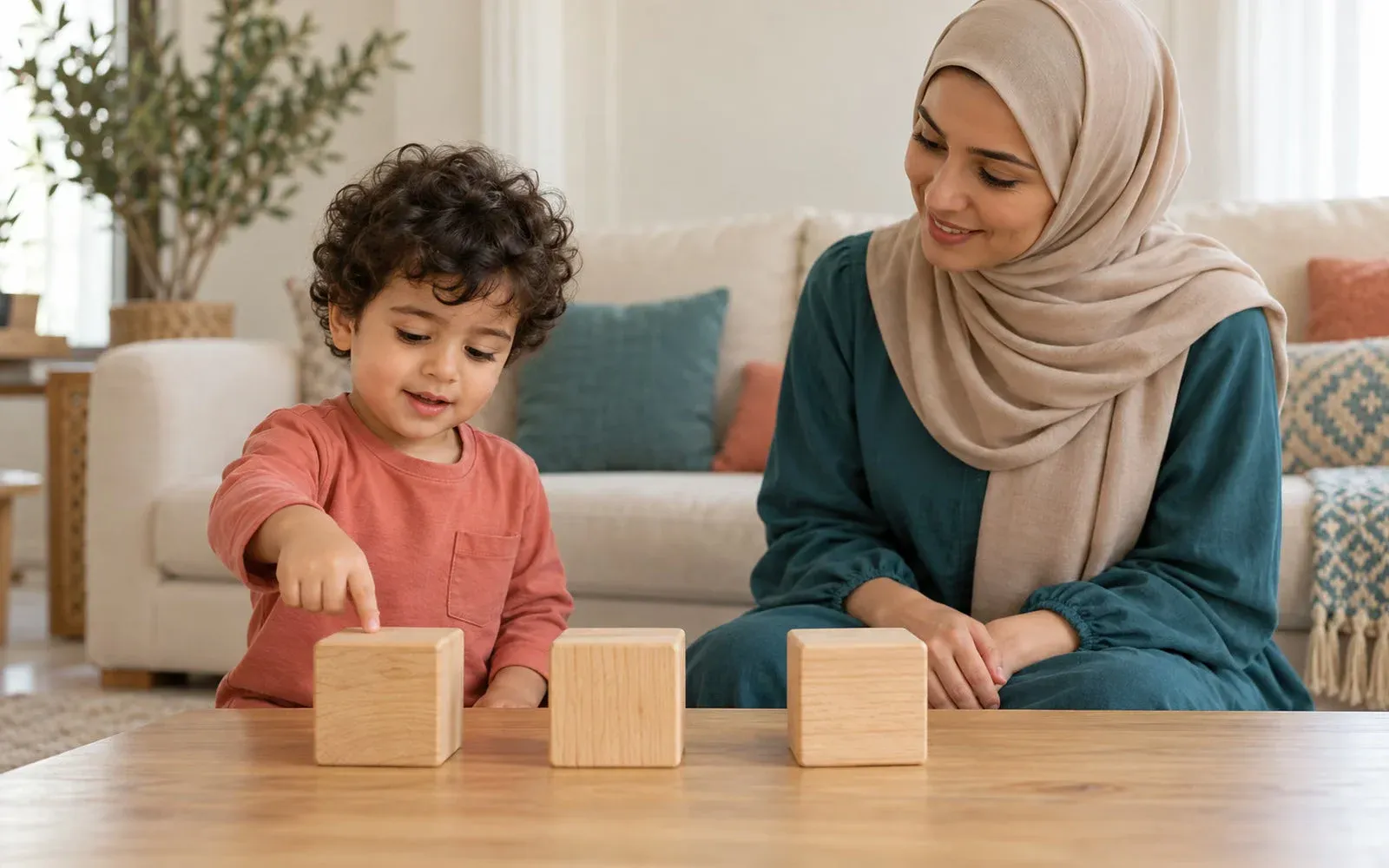
Another child comes into your home and heads straight for the car your child hasn’t touched since morning. Suddenly that car is the most important thing in the room: your child grips it tightly, says “Mine,” and then the crying or grabbing begins. That’s when we might hear: “Don’t be selfish… share!”
But a two-year-old doesn’t see the situation the way an adult does. They’re still learning what ownership means, how to wait, and that a toy comes back after someone else has used it. They may be able to play next to another child, but they can’t yet negotiate with them or consistently control their impulses.
Refusing to hand over a toy right away doesn’t mean a child will grow up selfish, and forcing them to let go of it on the spot doesn’t guarantee they’ve understood sharing. What they need are repeated, safe opportunities to learn: it’s your turn now, this child will be next, and the toy will come back.
In this guide, we’ll explain parallel play and the difference between sharing and taking turns, then offer 8 practical steps for handling play between two children without leaving them to grab from each other, and without turning every playdate into a test of character.
Important note: A single behavior with a toy does not diagnose a social or developmental problem. Children differ in their temperament, their experiences, and their ability to wait. If you have broader concerns about your child’s communication, interaction, or play, or you notice they’ve lost a skill they used to have, talk to your pediatrician and ask for a developmental screening if needed.
First: What Do We Mean by Sharing?
We use the word “share” for several different situations, and that confuses children:
Sharing something that can be divided
Like a child giving some blocks to another child, splitting play dough into two pieces, or using crayons from the same box.
Taking turns with a single item
Like one car, a swing, or a puzzle with a single board. Here, the two children can’t use the item in the same way at the same moment, so they need a clear turn.
Playing together toward a shared idea
Like building one road, rolling a ball back and forth, or acting out a store. This takes more than handing over an object; it requires shared attention, words, waiting, and changing the plan.
When we tell a young child “Share the car,” they don’t know whether they’re supposed to give it away for good, for a minute, or play with it together with the other child. A more precise phrase is: “You’re using the car now. When you’re done, it’s Layan’s turn.”
Why Is It Hard for a Two-Year-Old to Share Their Toys?
The American Academy of Pediatrics explains that two-year-olds may refuse to share things that matter to them, and may play beside other children without organized interaction. This doesn’t mean the parents have failed; the child is still learning empathy, self-control, and how to understand another person’s point of view.
At this stage:
-
What they want right now feels more important than the promise that “the toy will come back later.”
-
The child may not have the words they need to ask for a turn.
-
Waiting is hard, especially when they’re tired, hungry, or excited.
-
Another child’s presence can suddenly make a familiar toy far more valuable.
-
They may know the sharing rule at a calm moment but be unable to apply it in the middle of a conflict.
That’s why we need to step in in a way that stops harm and protects turns, and then teaches the next step, instead of settling for an order or a lecture.
What Is Parallel Play?
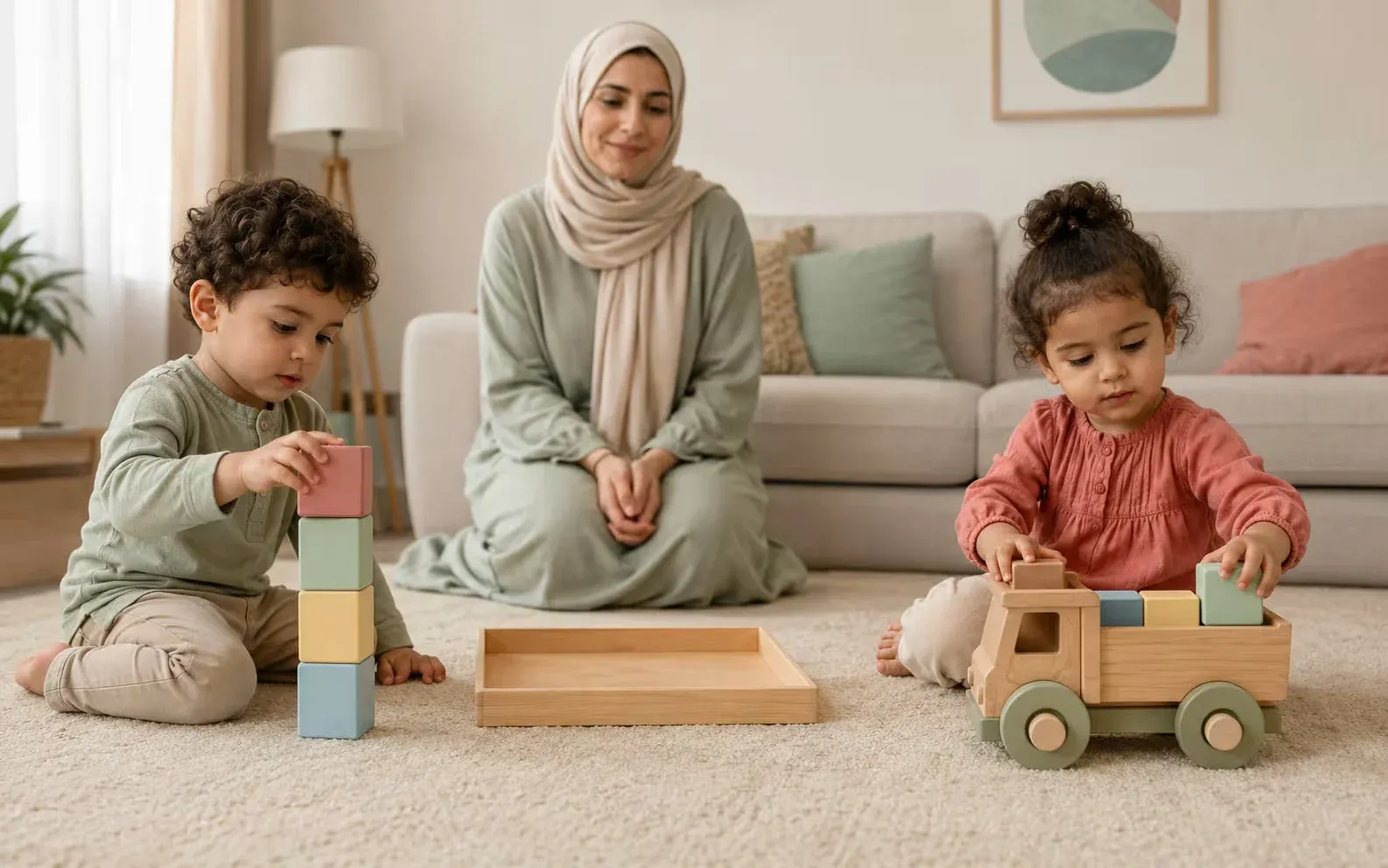
Parallel play is when two children play near each other, perhaps using similar materials or watching one another, but each child leads their own activity. One might build a tower while the other loads blocks into a truck.
This isn’t a failure at social play. It gives the child a chance to get used to having others around, notice their ideas, imitate them, and use the same space before playing together becomes more organized.
Among the social and emotional milestones for 30 months, the CDC notes that most children play next to other children and sometimes play with them. The wording of the milestone itself matters: next to them and sometimes with them; moving between solo, parallel, and shared play is normal.
Approximate stage What we might see What the adult needs to provide Before age 2 Solo play and simple exchanges with an adult Short back-and-forth games like rolling a ball Around age 2 Playing near another child with a strong interest in objects Enough space, close supervision, and short, simple words Around age 2½ Parallel play with moments of interaction or imitation Help with asking, waiting, and short turn-taking Age 3 and up More interaction, and gradually shared stories or goals Support for negotiating and resolving conflicts without managing every stepThese ages are approximate, not a test. A child might play cooperatively in one activity and prefer playing alone in another, or share easily at daycare while guarding their favorite toys at home.
What Does a Child Learn Before Sharing Independently?
Before a young child hands a toy to someone else on their own, they need several overlapping skills:
-
Noticing that someone else wants a turn.
-
Using a word or gesture instead of grabbing.
-
Tolerating a wait that suits their abilities.
-
Trusting that their turn will come, or that the toy will come back to them.
-
Stopping their hand when they’re upset.
-
Accepting that the other child may use the toy differently.
-
Asking an adult for help when they can’t solve it themselves.
These skills don’t appear after a single lecture. They develop through back-and-forth games, clear examples from adults, and consistent intervention during conflicts.
1. Replace “Share Right Now” with a Clear, Protected Turn
If a child is using a toy, we don’t pull it out of their hands the moment another child asks for it. Say:
-
“Adam is using the truck now.”
-
“When he’s done, it’s your turn.”
-
“I’ll help you wait.”
Protecting the current turn teaches both children that the rule doesn’t depend on who cries or grabs the most. It also makes the child holding the toy more willing to give it up later, because they don’t feel that every approach will end their play.
And a “long turn” doesn’t always mean the child keeps the toy until the end of the visit. If the activity is shared by nature, or waiting isn’t practical, the adult can set a shorter, predictable turn. What matters is that the change is clear, not sudden.
2. Practice Taking Turns with Your Child During Calm Moments
Don’t wait for the first conflict to teach turns. Use a simple activity with your child alone:
-
Roll a big ball back and forth.
-
Put a block in the box, then let them put one in.
-
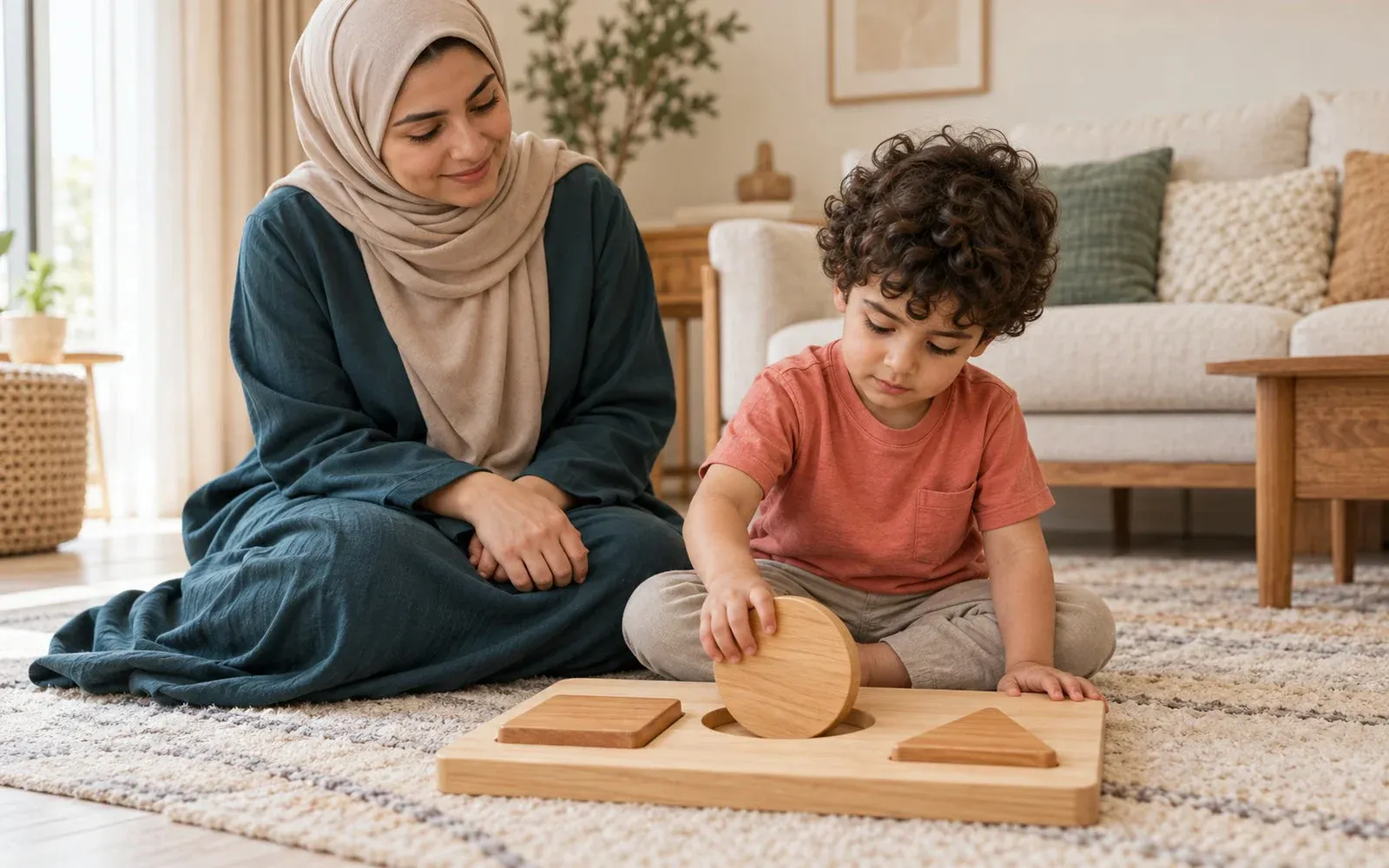
Fit in one puzzle piece, then say “Your turn.”
-
Push a car down a ramp, then give it back to them.
-
Take turns putting toys on the shelf while tidying up.
Use the same two phrases: “My turn” and “Your turn.” Once they become familiar during fun moments, they’re easier to use later with another child.
3. Give Your Child Short Words to Use Instead of Their Hands
In the middle of a conflict, a child can’t process a long explanation. Practice short phrases with them:
-
“My turn after you.”
-
“When you’re done.”
-
“Help me.”
-
“I’m using it.”
-
“Can I have a turn?”
If their speech is limited, they can hold out an open hand to ask, or point to themselves and then wait. Say the phrase for them, without making them repeat it before you help.
4. Prepare for the Playdate Before the Other Child Arrives
Preparing ahead reduces predictable conflicts:
-
Ask your child about a favorite toy they don’t want anyone else to use, and put it away before the visit.
-
Put away fragile items or things that need constant adult involvement.
-
Set up activities that allow side-by-side play: big blocks, two cars on a wide road, two balls, or separate containers for filling and carrying.
-
Don’t bring out all the toys; clutter increases switching and competition.
-
Start with a short visit, at a time when both children are as rested as possible.
-
Stay close, rather than letting a conflict escalate and then stepping in angrily.
You don’t need to buy two of every toy. You can duplicate a few basic items that work in parallel, while keeping other toys for taking turns.
If too many toys on display have the children switching around and pulling things out without really playing, see steps for setting up a calmer play space.
5. Describe the Conflict Neutrally Before Looking for a Solution
ZERO TO THREE recommends describing what happened the way a sportscaster describes a scene, without blame:
“You both want the train. Samer was using it, Nour took it, and now you’re both upset.”
Describing slows the situation down and puts words to what happened. Avoid:
-
“You always grab.”
-
“Your sister is nicer than you.”
-
“Shame on you, don’t you love your friends?”
-
“Give it to her because you’re the oldest.”
After describing, restate the rule: Who was using the toy? Who’s next? And what can the waiting child do right now?
6. Stop the Grabbing and Protect Both Children Without Humiliating Punishment
If a child reaches out to grab or hit:
-
Move in quickly and calmly.
-
Gently stop their hand if needed for safety.
-
Say: “I won’t let you grab or hit.”
-
Return the toy to the child whose turn it is if it was taken by force.
-
Reassure the waiting child: “You’re next, and I’ll help you.”
-
Offer a waiting activity, not a reward for screaming.
The limit here is clear: no hurting and no snatching. But we don’t demand an immediate verbal apology from a child who is still angry. We help them calm down first, and then they can return the toy, check on the other child, or try the right phrase.
7. Make Waiting Understandable and Realistic
The word “later” is unclear to a young child. You can make waiting concrete:
-
“After the car goes around twice, it’s Yara’s turn.”
-
“When this tower is finished, we’ll give the blocks to Nader.”
-
“You’re next after this piece.”
In some situations, a simple visual timer can help, but not in every conflict. A timer is useful when both children need a clear external rule, not when it’s used to cut off a child’s play every minute.
While they wait, stay with the child. Offer a related option: they could build the bridge the car will cross later, carry the station box, or choose the next piece. We don’t make them act happy; it’s enough to help them wait without hurting anyone.
8. Praise Specific Behavior and Help Repair the Situation
Instead of “Good job sharing,” describe what they did:
-
“You waited until his turn was over.”
-
“You asked for the car without grabbing it.”
-
“You gave him two pieces and kept two for yourself.”
-
“You gave the toy back when you were done.”
Specific praise tells the child which step worked. And if grabbing or pushing happens, help them make amends in practical ways: returning the toy, rebuilding what got knocked down, bringing a replacement piece, or checking on the other child once they’ve calmed down.
A Ready-Made Script for Handling a Conflict Over One Toy
You can use this short sequence:
-
Stop the harm: “I won’t let you grab.”
-
Describe what’s happening: “Sara is using the car, and you want it.”
-
Protect the turn: “Sara is finishing her turn.”
-
Say who’s next: “You’re next when she’s done.”
-
Support the waiting: “Come on, let’s build her a parking spot, or wait together.”
-
Announce the switch: “Sara is done. Now it’s your turn.”
-
Describe the success: “You waited, and now you got your turn.”
We don’t need a speech about generosity in the middle of tears. The learning happens through a repeated rule and consistent action.
Simple Activities for Practicing Taking Turns
Activity Materials How the turns work Rolling the ball One big ball Each person pushes it to the other Filling the box A box and six big blocks One block for me, then one for you Taking-turns puzzle A simple board and 4 big pieces Each person places one piece Car ramp A big car and a stable ramp One push each, then the car comes back Building a tower Big blocks Each person adds a piece Tidying up A basket and big toys Each person puts one item backStart with one adult, for a short and fun stretch of time. Once the child understands the pattern, try it with a sibling or another child, with the adult staying close.
And make sure the pieces are age-appropriate and don’t pose a choking or injury hazard. You can check the guide to choosing a safe toy for a child under 3.
Does a Child Have to Share All Their Toys?
No. Having personal things that aren’t put out during a playdate can help a child feel secure. It might be the doll they sleep with, a toy tied to a routine, or something they’re afraid will get damaged.
Before the guest arrives, choose together with your child:
-
Toys that will stay put away.
-
Toys that can be used side by side.
-
One or two toys for taking turns.
But we don’t let a child bring out a special toy in front of another child and then use it to tease them. If they choose to keep it private, it stays out of the play area during the visit.
Common Mistakes When Teaching Sharing
Calling the child selfish
The label attacks their identity and doesn’t teach them what to do with their hands or how to ask for a turn.
Taking the toy away to force generosity
It might stop the conflict for the moment, but it doesn’t make the turn system clear. Decide who is using the toy and who is next, instead of snatching it away without warning.
Forcing a child to apologize while they’re still angry
They may repeat a word without understanding it or making amends. Start by calming things down and restoring what’s fair, then help them do something to repair the situation.
Leaving the children to “work it out themselves” after hitting has started
Children need chances to negotiate, but the adult is responsible for stopping hurting and grabbing, and for supporting their words.
Using a timer for every toy
It can turn play into a series of interruptions. Use one when long waits or unclear turns are a problem, not as an automatic rule for every activity.
Bringing out one highly attractive toy at the start of the visit
Start with roomy activities that allow closeness and imitation without direct competition, then try a turn-taking toy once both children have settled.
Expecting the same level of sharing at all times
Hunger, tiredness, a new place, and how much the toy matters all have an effect. A slip doesn’t mean the child has forgotten the skill or is trying to embarrass you.
When Is It Worth Asking Your Pediatrician?
Refusing to share a toy isn’t enough on its own to conclude there’s a problem. Many two-year-olds need close help when playing with peers.
Talk to your pediatrician if you have broader concerns about your child’s communication, interaction, or way of playing, or if:
-
They’ve lost a skill they used to have.
-
They show no interest in people or in playing near them, along with other observations that concern you.
-
They don’t use gestures, words, or other ways to ask for help in a way that fits their stage.
-
They can’t take part in any back-and-forth exchange with a familiar adult.
-
Concerning observations keep coming up at home and at daycare, or with different caregivers.
The CDC recommends not waiting when there’s a concern or a lost skill, and instead discussing your observations with the doctor and asking for a developmental screening if needed. Milestone checklists help with observation, but they don’t diagnose a child.
How Do We Talk About Sharing at Giggly?
We won’t describe a toy as something that:
-
Teaches sharing automatically.
-
Prevents grabbing or tantrums.
-
Develops social intelligence.
-
Makes a child cooperative.
-
Fixes selfish behavior.
We use observable descriptions:
-
Can be used in a back-and-forth game with parents.
-
Includes big pieces that can be divided between two children under supervision.
-
Allows adding one piece at a time, taking turns.
-
Can be used side by side or within a clear turn.
-
Doesn’t rely on a screen or electronic effects that drive the whole activity.
We also keep in mind that the number of pieces doesn’t equal the quality of interaction. A single ball can work well for a clear exchange, while a set of big blocks suits parallel play. You can browse the educational toys at Giggly and compare the age range, safety, and actual way of playing for each product.
A Quick Checklist Before the Next Playdate
-
Put away the special toy your child doesn’t want to share.
-
Set up two activities that allow parallel play.
-
Choose just one toy for practicing turns.
-
Use “My turn” and “Your turn” with your child ahead of time.
-
Stay close to both children.
-
Protect the current turn and say who’s next.
-
Calmly stop grabbing and hitting.
-
Help the waiting child with a related activity.
-
Describe successful behavior instead of using general labels.
-
End the visit before tiredness turns into a string of conflicts.
The Bottom Line
When a young child won’t share their toy, we don’t need to call them selfish or force them to hand it over immediately. We start by understanding their stage: they may be able to play next to another child, but they’re still learning how to ask, how to wait, and how to trust that their turn will come.
Protecting the current turn, saying who’s next, practicing back-and-forth games, using short phrases, and preparing the play space before the visit turn sharing into a concrete skill instead of a vague moral command.
The goal isn’t a child who gives up everything on request. The goal is for them to learn, over time: I don’t grab, I ask, I wait with help, I use my turn, and then I make room for someone else.
Frequently Asked Questions
When do children start sharing their toys?
Attempts at exchanging and sharing appear gradually, but many two-year-olds still prefer parallel play and need help with turns. At 30 months, the CDC notes that most children play next to other children and sometimes with them.
Is parallel play normal at age 2?
Yes. A child playing near another child without a shared story or goal can be appropriate for this stage. They may watch or imitate the other child, then go back to their own activity.
Should I force my child to give up their toy?
Stop grabbing and hurting, but don’t take away a toy they’re using just because another child asked for it. Protect their turn, say who’s next, and help the other child wait or choose a temporary activity.
What should I do if my child takes another child’s toy?
Stop their hand, return the toy to the child who was using it, then say: “He’s using it now, and you’re next.” Give your child words to ask with, and help them wait.
Should I use a timer for taking turns?
It can help when both children need a visible end to the turn, but it isn’t always necessary. Don’t use it to cut every activity short; choose a realistic amount of time and apply the same rule to both children.
Does my child have to share their favorite toy?
Not every personal belonging needs to be put out. Put the favorite toy away before the visit, and agree on which toys are available for play. If it stays private, it shouldn’t be brought out to tease the other child.
Should I buy two of every toy?
No. Two of some basic items can help with parallel play, but children also need activities where they practice taking turns. Choose duplicates when they prevent a predictable conflict, not as a solution for every toy.
Is refusing to share a sign of a disorder?
You can’t draw that conclusion from this behavior alone. If your concern involves communication, interaction, or play more broadly, or your child has lost a skill they had before, talk to your pediatrician and ask for a developmental screening.
Trusted Sources Used in Preparing This Article
-
Developmental milestones at 30 months, and playing next to and sometimes with other children — CDC
-
Activities to support sharing and taking turns at age 2 — CDC
-
Social development in 2-year-olds — HealthyChildren / American Academy of Pediatrics
-
Your child’s 2½-year checkup and how they play — HealthyChildren
-
Helping young children with sharing and protecting turns — ZERO TO THREE
-
Preparing for playdates and supporting sharing — Raising Children Network
-
Encouraging prosocial behavior in young children — Raising Children Network